Home
›
Courses
› Generative AI for Data Analytics: From Raw Data to Decisions, Faster
Data & AnalyticsAI Certification
Generative AI for Data Analytics:
From Raw Data to Decisions, Faster
Use generative AI across the analytics workflow — SQL drafting, data cleaning, exploratory analysis,
dashboard narratives, and stakeholder communication — without rewriting your stack.
Professionals from global companies use Coursiv to build practical AI skills.
4x
Faster report turnaround
30
Analytics-specific lessons
640+
Analysts enrolled this week
10
Hands-on analytics projects
Why most teams underuse AI
Analysts are drowning in ad-hoc requests while leaders demand faster, clearer insights — and most teams have
not figured out where generative AI actually fits.
This program shows data analysts, BI professionals, and analytics engineers where generative AI genuinely
speeds up the workflow — and where it introduces risk — so you ship better insights, faster.
Without generative AI in your analytics workflow
Simple SQL and Python tasks still consume a disproportionate share of your week
Exploratory analysis on new datasets is slow because every step starts from zero
Dashboards ship without clear narratives, so stakeholders still ask the same questions
Text feedback and open-ended survey data sit unused because categorization is manual
After this generative AI course
SQL and Python drafts come back in seconds, grounded in a shared data dictionary
EDA on a new dataset becomes a guided, repeatable checklist instead of starting blank
Every dashboard ships with an executive-ready narrative your leadership actually reads
Qualitative data turns into structured themes that sit next to your quantitative views
How data analysts, BI professionals, and analytics engineers use AI after this course
Practical workflows tailored for data analysts, BI professionals, and analytics engineers.
SQL and Python Drafting
Generate, explain, and debug SQL queries and Python scripts against your own schema using a Custom GPT
trained on your data dictionary.
High impact
Exploratory Data Analysis
Accelerate EDA with AI-suggested distributions, outlier checks, and segmentation hypotheses that surface
patterns faster.
Popular
Dashboard Narratives
Turn raw dashboards into concise, business-friendly narratives that explain what changed, why, and what to
do about it.
Executive-ready
Text Classification and Clustering
Categorize free-text feedback, support tickets, and reviews into themes ready for quantitative analysis.
Time saver
A/B Test Readouts
Draft experiment readouts with effect sizes, caveats, and recommendations that analysts and PMs actually
align on.
Execution
Stakeholder Q&A
Handle follow-up questions from stakeholders instantly with a reusable GPT that knows your metric
definitions.
Eligibility overview for generative AI for data analytics learners. Built for practical adoption, not
technical prerequisites.
Section
Candidate Type
Eligible?
Typical Requirement
Notes
Primary fit
Data analysts and senior analysts
Yes
Daily work with SQL and BI tools
Primary audience — course maps directly to the analyst workflow end to end.
Primary fit
BI developers and BI leads
Yes
Building reports, dashboards, and semantic layers
Strong fit — AI patterns accelerate dashboard narratives and stakeholder communication.
Primary fit
Analytics engineers
Yes
Owning transformations in dbt or similar tools
Useful for documentation, testing, and explaining models to stakeholders.
Adjacent backgrounds
Data scientists focused on applied work
Yes
Experience with SQL and Python
Helpful for text classification, stakeholder comms, and productizing findings.
Adjacent backgrounds
Operations and growth analysts
Yes
Embedded in a business function
Useful for experimentation readouts, segmentation, and executive summaries.
Adjacent backgrounds
Product managers with analytics ownership
Yes
Running self-serve analytics or KPIs
Fits PMs who write queries themselves and need to communicate findings clearly.
Experience level
Junior analysts (0-2 years)
Yes
Basic SQL and dashboard building
Course provides structure and AI patterns that compress the ramp-up curve.
Experience level
Mid-level analysts (2-5 years)
Yes
Comfortable across SQL, BI tools, and stakeholder work
Best fit — immediately replaces repetitive parts of the workflow with AI patterns.
Experience level
Senior analysts and analytics leads
Yes
5+ years and team responsibility
Useful for setting team AI standards, governance, and scaling analytics practice.
Course Modules
3 units · 34 lessons · ~6 hours total duration
Lesson 1 - How LLMs Reason About Data and Where They Break
Understand how llms reason about data and where they break and apply it to your daily workflow.
Lesson 2 - Picking the Right Mode for Each Analytics Task
Use picking the right mode for each analytics task to make faster, more informed decisions and
demonstrate clear ROI.
Lesson 3 - Voice Mode
Put voice mode into practice with hands-on exercises drawn from real chatgpt scenarios.
Lesson 4 - ChatGPT & Apps
Apply chatgpt & apps directly to your role with step-by-step guidance tailored for data
analysts, BI professionals, and analytics engineers.
Lesson 5 - Image Generation With ChatGPT
Tackle image generation with chatgpt with a proven approach that saves time and reduces common
mistakes.
Lesson 6 - Stay Organized: Projects
Put stay organized: projects into practice with hands-on exercises drawn from real chatgpt
scenarios.
Lesson 7 - Building a Custom GPT for Your Data Dictionary
Gain hands-on experience with building a custom gpt for your data dictionary using prompts and
templates built for data analysts, BI professionals, and analytics engineers.
Use automating repetitive analytics requests to make faster, more informed decisions and
demonstrate clear ROI.
Lesson 9 - ChatGPT for Effective Communication
Deliver chatgpt for effective communication that is clear, persuasive, and ready for stakeholders.
Lesson 10 - Background Research for Metric Definitions and Benchmarks
Explore background research for metric definitions and benchmarks and leave with outputs you can
bring straight to your team.
Lesson 11 - Planning Multi-Step Analyses Without Losing the Thread
Gain hands-on experience with planning multi-step analyses without losing the thread using prompts
and templates built for data analysts, BI professionals, and analytics engineers.
Lesson 12 - Organizing Personal Finances
Tackle organizing personal finances with a proven approach that saves time and reduces common
mistakes.
Lesson 13 - Turning Dashboards into Executive-Ready Narratives
Get actionable takeaways from turning dashboards into executive-ready narratives that you can use
in your next work session.
Lesson 14 - From Ad-Hoc Question to Reusable Analysis Template
Move from ad-hoc question to reusable analysis template with a clear, step-by-step AI process.
Lesson 1 - Where Generative AI Fits in the Modern Data Stack
Cover where generative ai fits in the modern data stack end to end and walk away with a reusable
playbook for your workflow.
Lesson 2 - Using AI to Frame and Scope Analytics Questions
Use using ai to frame and scope analytics questions to make faster, more informed decisions and
demonstrate clear ROI.
Lesson 3 - Turning Numbers into Decisions, Not Just Charts
Learn how turning numbers into decisions, not just charts fits into your broader workflow and
where it delivers the highest value.
Lesson 4 - Scenario Modeling and Sensitivity Analysis with AI
Cover scenario modeling and sensitivity analysis with ai end to end and walk away with a reusable
playbook for your workflow.
Lesson 5 - Running Effective Data Reviews with AI-Prepared Materials
Explore running effective data reviews with ai-prepared materials and leave with outputs you can
bring straight to your team.
Lesson 6 - Data Storytelling for Non-Technical Audiences
Understand and engage your audience through data storytelling for non-technical audiences
techniques that build lasting relationships.
Lesson 7 - Writing Clear Executive Summaries of Analytical Findings
Apply writing clear executive summaries of analytical findings directly to your role with
step-by-step guidance tailored for data analysts, BI professionals, and analytics engineers.
Lesson 8 - Responsible Generative AI for Sensitive Data
Navigate responsible generative ai for sensitive data with clear policies that protect both your
team and your users.
Lesson 1 - Modern Analytics Use Cases Where AI Adds the Most Value
Use modern analytics use cases where ai adds the most value to make faster, more informed
decisions and demonstrate clear ROI.
Lesson 2 - Defining Clean Metrics and Avoiding AI-Assisted Errors
Use defining clean metrics and avoiding ai-assisted errors to make faster, more informed decisions
and demonstrate clear ROI.
Lesson 3 - Classifying and Clustering Text Data with AI
Put classifying and clustering text data with ai into practice with hands-on exercises drawn from
real ai performance marketing scenarios.
Lesson 4 - Segmentation and Cohort Analysis with AI Support
Get actionable takeaways from segmentation and cohort analysis with ai support that you can use in
your next work session.
Lesson 5 - Optimizing Reporting Pipelines with AI
Optimize your approach to optimizing reporting pipelines with ai and improve outcomes with less
manual effort.
Lesson 6 - Audience Insights from Qualitative and Quantitative Data
Understand and engage your audience through audience insights from qualitative and quantitative
data techniques that build lasting relationships.
Lesson 7 - Automating Recurring Report Delivery
Apply automating recurring report delivery directly to your role with step-by-step guidance
tailored for data analysts, BI professionals, and analytics engineers.
Lesson 8 - Iterating on Dashboards Based on User Feedback
Develop your skills in iterating on dashboards based on user feedback through guided modules
designed for working professionals.
Lesson 9 - Extending Analytics to New Data Sources
Use extending analytics to new data sources to make faster, more informed decisions and
demonstrate clear ROI.
Lesson 10 - A/B Test Analysis and Attribution with AI
Get actionable takeaways from a/b test analysis and attribution with ai that you can use in your
next work session.
Lesson 11 - Anomaly Detection and Data Quality Checks
Develop your skills in anomaly detection and data quality checks through guided modules designed
for working professionals.
Lesson 12 - Sustainable Analytics Practices with AI
Use sustainable analytics practices with ai to make faster, more informed decisions and
demonstrate clear ROI.
Official Certificate
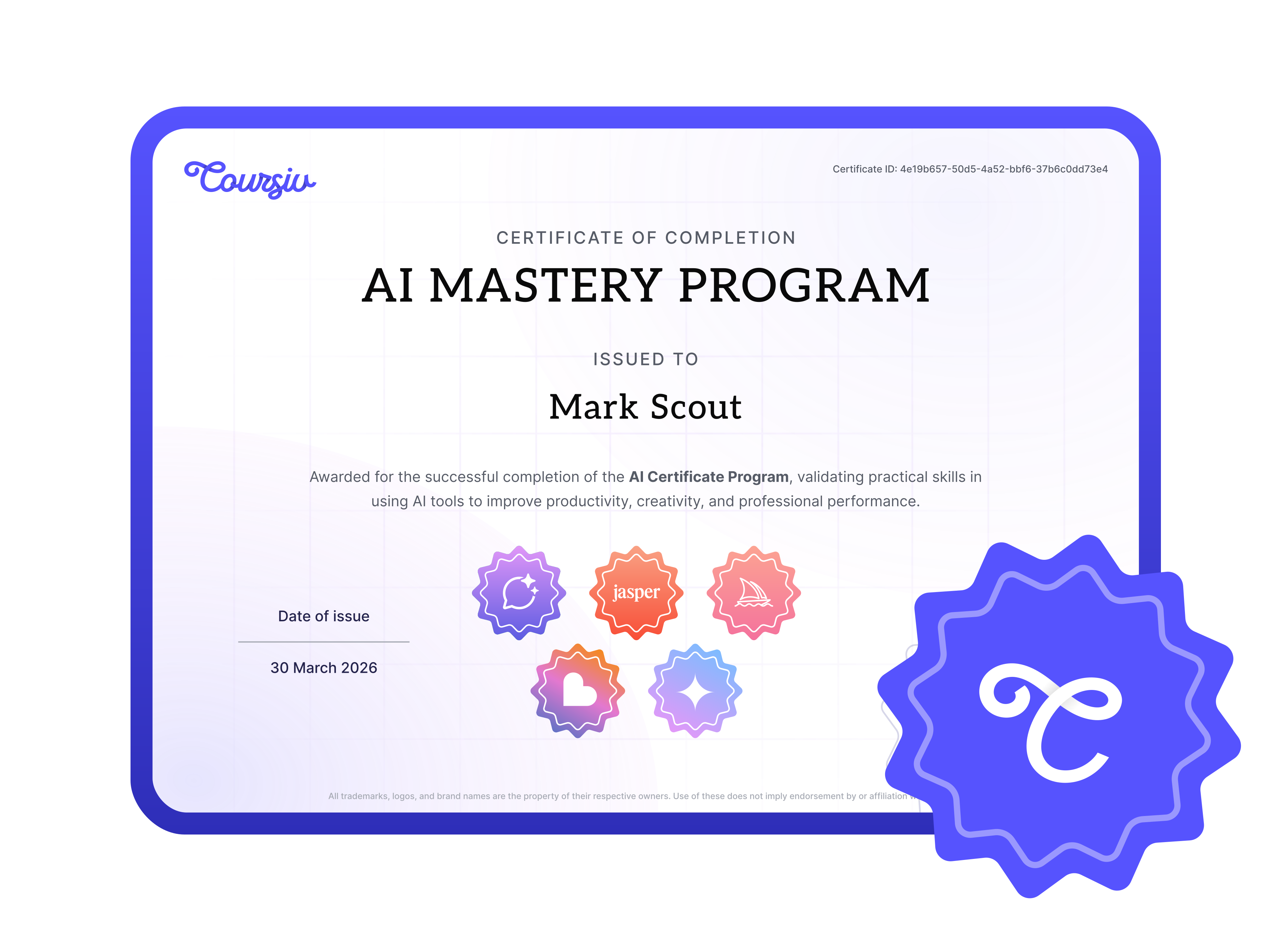
Earn Your AI Certification
with Coursiv
Complete all modules on AI-assisted SQL, exploratory analysis, narrative reporting, and responsible use of
generative AI for data to earn your Coursiv Generative AI for Data Analytics certificate.
Add to LinkedIn
Showcase your AI expertise on your professional profile
Generative AI for data analytics means using LLMs and AI assistants to accelerate the analytics workflow —
drafting SQL, exploring datasets, summarizing results, and writing narratives — while you remain
responsible for data correctness and interpretation.
AI can draft SQL and Python fast, especially when grounded in a shared data dictionary, but you still
validate against your warehouse. The course teaches you how to build trustworthy prompts and review loops
so AI-generated code is accurate and auditable.
A working knowledge of SQL helps, since analytics work is primarily query-based. Python familiarity is
useful but not required. The course focuses on analytics workflows and how to collaborate with AI, not on
teaching SQL or Python from scratch.
The primary tool is ChatGPT (including Custom GPTs). Prompt patterns transfer to Claude, Gemini, and
in-warehouse AI assistants like Snowflake Cortex, BigQuery Gemini, and Databricks AI so you can use
whichever platform your team has approved.
The course includes a module on responsible use for sensitive data — covering anonymization, enterprise
deployments, retention settings, and when not to paste data into public tools. You leave with clear
guardrails you can apply at work.
You receive a generative AI for data analytics certification from Coursiv after completing the modules and
final assignment, which includes building a Custom GPT and shipping an analytical narrative you can share
with stakeholders.
Related courses for data analysts, BI professionals, and analytics engineers
Practical workflows tailored for data analysts, BI professionals, and analytics engineers.
generative AI for data analytics: practical certification path
A hands-on program for data analysts and BI professionals on using generative AI across the full analytics
workflow — from SQL drafting and EDA to narratives and stakeholder communication — with clear guardrails for
data quality and governance.
Where Generative AI Actually Fits in Analytics
Generative AI is being sold as a replacement for analysts, but the reality on the ground is different — it
is a powerful accelerator for specific parts of the workflow, and a liability in others. This course starts
by mapping exactly where generative AI adds value in data analytics: SQL drafting, EDA scaffolding,
dashboard narratives, text classification, and executive communication. It also clearly identifies where AI
underperforms today: statistical rigor, production pipelines, and business-critical metric definitions.
Understanding this map is the difference between analysts who use AI productively and teams that waste
months on the wrong experiments.
Faster SQL and Python Without Losing Trust
The most immediate win for analysts is faster SQL and Python. The course walks through how to build a Custom
GPT grounded in your own data dictionary, metric definitions, and naming conventions so AI-generated queries
line up with reality instead of hallucinating columns. You will learn structured patterns for validating AI
output — counts, sample rows, edge cases, and cross-checks — so velocity does not come at the cost of
correctness. The goal is an analytics workflow where drafts are fast, review is disciplined, and final
deliverables are trustworthy.
Exploratory Analysis and Qualitative Data
EDA on a new dataset is often the most time-consuming and repetitive part of analytics. Generative AI
compresses this dramatically by suggesting distributions to check, outliers to investigate, segmentation
cuts to try, and hypotheses to test. The course also covers qualitative data — feedback, support tickets,
open-ended survey responses — which most teams leave on the floor because manual classification is too slow.
You will build AI-assisted pipelines that categorize and cluster text into themes ready to sit alongside
your quantitative views.
Narratives That Land with Stakeholders
The biggest productivity gap in most analytics teams is not analysis speed — it is the gap between finished
analysis and stakeholder action. Generative AI closes this gap by turning dashboards into business-friendly
narratives, drafting experiment readouts with effect sizes and caveats, and preparing executive summaries
that anticipate follow-up questions. You will build a reusable narrative scaffold that takes your raw
findings and produces stakeholder-ready communication in a fraction of the usual time, so your insights
actually drive decisions.
Governance, Safety, and Your Certification
Because analytics touches sensitive data, responsible use is non-negotiable. The program dedicates a full
module to enterprise deployments, anonymization patterns, retention controls, and when not to paste data
into public LLMs. You finish with a clear, practical governance framework that you can share with your data
leadership. Complete the modules and final assignment to earn your generative AI for data analytics
certification from Coursiv — a credential that positions you as a modern, AI-capable analyst inside any data
organization.
Ready to master generative AI for data analytics?
Join over 1 million learners on Coursiv.
Build practical AI skills in 30 days with short daily lessons.