Home
›
Courses
› ChatGPT for Architects: Concept to Client Presentation, Faster
AI for ArchitectureAI Certification
ChatGPT for Architects:
Concept to Client Presentation, Faster
Use ChatGPT and Midjourney together to explore design concepts, write specifications, refine narratives,
and prepare client-ready documentation in your architectural practice.
Professionals from global companies use Coursiv to build practical AI skills.
50%
Less time on documentation
34
Practice-focused lessons
470+
Architects enrolled this week
3
Complete studio toolkits
Why most teams underuse ChatGPT
Most architectural practices are drowning in documentation, not design. ChatGPT lets you reclaim those hours
without lowering your studio standards.
This program shows architects and design professionals exactly how to deploy ChatGPT and Midjourney across
concept, documentation, and client-facing work.
Before ChatGPT in the studio
Specifications, schedules, and minutes take evenings that should belong to design work
Concept narratives are rewritten from scratch for every proposal and competition
Code and precedent research eats hours before any design decisions can be made
Portfolio updates fall to the bottom of the list and the practice struggles to show recent work
After ChatGPT in the studio
Specifications and admin documents draft in minutes from structured studio templates
Concept narratives start from a custom GPT trained on your practice voice and typologies
Code research becomes a guided summary with verified sources before you touch the official documents
Case studies and portfolio entries are written within days of project completion instead of six months
later
How architects and design professionals use ChatGPT after this course
Practical workflows tailored for architects and design professionals.
Concept Ideation and Mood Boards
Move from brief to mood board to concept narrative in an afternoon using ChatGPT for structure and
Midjourney for imagery.
High impact
Specifications and Schedules
Draft material specifications, door and window schedules, and finish schedules from your own studio
standards.
Time saver
Client Communication and Updates
Produce consistent weekly client updates, meeting minutes, and design-rationale emails across every live
project.
Popular
Competition and Proposal Writing
Structure competition submissions and fee proposals with proven narrative frames and studio-specific tone.
Growth
Code and Regulation Research
Use ChatGPT to summarize local codes, zoning overlays, and precedent projects before diving into detailed
compliance review.
Execution
Portfolio and Practice Marketing
Turn completed projects into case studies, social content, and practice-website copy that attracts the
commissions you want.
Eligibility overview for ChatGPT for architects learners. Built for practical adoption, not technical
prerequisites.
Section
Candidate Type
Eligible?
Typical Requirement
Notes
Primary fit
Project architects and senior designers
Yes
Ownership of live project documentation
Primary audience — specifications, client comms, and design narrative modules map directly to your
week.
Primary fit
Principals of small and mid-size practices
Yes
Responsibility for proposals and business development
The competition, proposal, and portfolio modules target practice-growth work directly.
Primary fit
Interior architects and designers
Yes
Regular client-facing documentation
All workflows apply to interior practice — materials, specifications, and narrative especially.
Adjacent backgrounds
Landscape architects
Yes
Design documentation and client proposals
Midjourney and concept narrative modules translate naturally to landscape typologies.
Adjacent backgrounds
Architecture students and recent graduates
Yes
Active portfolio development
Portfolio and case-study modules are directly useful for job applications and early commissions.
Adjacent backgrounds
Urban designers and planners
Yes
Work across narrative, visuals, and policy documents
Research, narrative, and visualization modules all apply to masterplanning work.
Experience level
Early-career architects
Yes
Basic project experience
Starts from practical basics and builds up to studio-level workflows.
Experience level
Mid-career project architects
Yes
Running live projects independently
Best fit — reclaim time currently spent on specifications, admin, and client communication.
Experience level
Practice principals and directors
Yes
Business development responsibility
Useful for building practice-wide prompt libraries and custom GPTs around studio voice.
Course Modules
3 units · 34 lessons · ~6 hours total duration
Lesson 1 - ChatGPT in the Studio: What It Is and How Architects Use It
Gain hands-on experience with chatgpt in the studio: what it is and how architects use it using
prompts and templates built for architects and design professionals.
Lesson 2 - ChatGPT Features Every Architect Should Know
Break down chatgpt features every architect should know into clear steps you can execute within a
single work week.
Lesson 3 - Voice Mode for Site Visits and On-Site Notes
Break down voice mode for site visits and on-site notes into clear steps you can execute within a
single work week.
Lesson 4 - Connecting ChatGPT to Your Practice Tools
Apply connecting chatgpt to your practice tools directly to your role with step-by-step guidance
tailored for architects and design professionals.
Lesson 5 - Generating Reference Imagery for Concept Boards
Break down generating reference imagery for concept boards into clear steps you can execute within
a single work week.
Lesson 6 - Organizing ChatGPT Projects by Client and Site
Tackle organizing chatgpt projects by client and site with a proven approach that saves time and
reduces common mistakes.
Lesson 7 - Building a Custom GPT Trained on Your Studio Standards
Build confidence in building a custom gpt trained on your studio standards with structured
exercises and immediate, practical application.
Lesson 8 - Automating Studio Admin: Emails, Meeting Notes, Minutes
Build confidence in automating studio admin: emails, meeting notes, minutes with structured
exercises and immediate, practical application.
Lesson 9 - Writing Client Updates and Consultant Coordination Notes
Cover writing client updates and consultant coordination notes end to end and walk away with a
reusable playbook for your workflow.
Lesson 10 - Researching Codes, Precedents, and Material Specifications
Cover researching codes, precedents, and material specifications end to end and walk away with a
reusable playbook for your workflow.
Lesson 11 - Planning Design Phases from Concept to Construction
Work through planning design phases from concept to construction with examples that mirror the
challenges architects and design professionals face every day.
Lesson 12 - Project Fee Proposals and Billing Summaries
Put project fee proposals and billing summaries into practice with hands-on exercises drawn from
real chatgpt scenarios.
Lesson 13 - Writing Case Studies and Competition Submissions
Learn how writing case studies and competition submissions fits into your broader workflow and
where it delivers the highest value.
Lesson 14 - From Napkin Sketch to Client-Ready Concept Narrative
Move from napkin sketch to client-ready concept narrative with a clear, step-by-step AI process.
Lesson 1 - How AI Reshapes Architectural Portfolio Work
Understand how ai reshapes architectural portfolio work and apply it to your daily workflow.
Lesson 2 - Defining Your Practice Voice and Visual Language
Build confidence in defining your practice voice and visual language with structured exercises and
immediate, practical application.
Lesson 3 - Selecting the Projects That Win Your Target Commissions
Gain hands-on experience with selecting the projects that win your target commissions using
prompts and templates built for architects and design professionals.
Lesson 4 - Preparing Drawings, Renders, and Photos for Portfolio Use
Explore preparing drawings, renders, and photos for portfolio use and leave with outputs you can
bring straight to your team.
Lesson 5 - Structuring Your Practice Site for Project Enquiries
Put structuring your practice site for project enquiries into practice with hands-on exercises
drawn from real build a strong portfolio with ai scenarios.
Lesson 6 - Writing Case Studies That Showcase Design Thinking
Learn how writing case studies that showcase design thinking fits into your broader workflow and
where it delivers the highest value.
Lesson 7 - Converting Portfolio Visitors into Design Briefs
Put converting portfolio visitors into design briefs into practice with hands-on exercises drawn
from real build a strong portfolio with ai scenarios.
Lesson 8 - Launching a Portfolio That Travels With You to Meetings
Break down launching a portfolio that travels with you to meetings into clear steps you can
execute within a single work week.
Lesson 1 - Midjourney for Architectural Concept Work
Tackle midjourney for architectural concept work with a proven approach that saves time and
reduces common mistakes.
Lesson 2 - Your First Concept Sketches in Midjourney
Cover your first concept sketches in midjourney end to end and walk away with a reusable playbook
for your workflow.
Lesson 3 - Lighting Studies for Interior and Facade Concepts
Work through lighting studies for interior and facade concepts with examples that mirror the
challenges architects and design professionals face every day.
Lesson 4 - Aspect Ratios for Elevations, Sections, and Site Views
Work through aspect ratios for elevations, sections, and site views with examples that mirror the
challenges architects and design professionals face every day.
Lesson 5 - Worm's Eye, Bird's Eye, and Human-Scale Perspectives
Build confidence in worm's eye, bird's eye, and human-scale perspectives with structured
exercises and immediate, practical application.
Lesson 6 - Directing Materiality, Form, and Atmosphere
Gain hands-on experience with directing materiality, form, and atmosphere using prompts and
templates built for architects and design professionals.
Lesson 7 - Iterating Concepts Without Losing Design Intent
Put iterating concepts without losing design intent into practice with hands-on exercises drawn
from real midjourney scenarios.
Lesson 8 - Combining Sketch References with Midjourney Styling
Build confidence in combining sketch references with midjourney styling with structured exercises
and immediate, practical application.
Lesson 9 - Rendering Architectural Details and Product Specifications
Apply rendering architectural details and product specifications directly to your role with
step-by-step guidance tailored for architects and design professionals.
Lesson 10 - Visuals for Proposals, Pitches, and Practice Marketing
Get actionable takeaways from visuals for proposals, pitches, and practice marketing that you can
use in your next work session.
Lesson 11 - Sharing Projects on Practice Channels
Apply sharing projects on practice channels directly to your role with step-by-step guidance
tailored for architects and design professionals.
Lesson 12 - Illustrating Design Narratives for Competitions
Explore illustrating design narratives for competitions and leave with outputs you can bring
straight to your team.
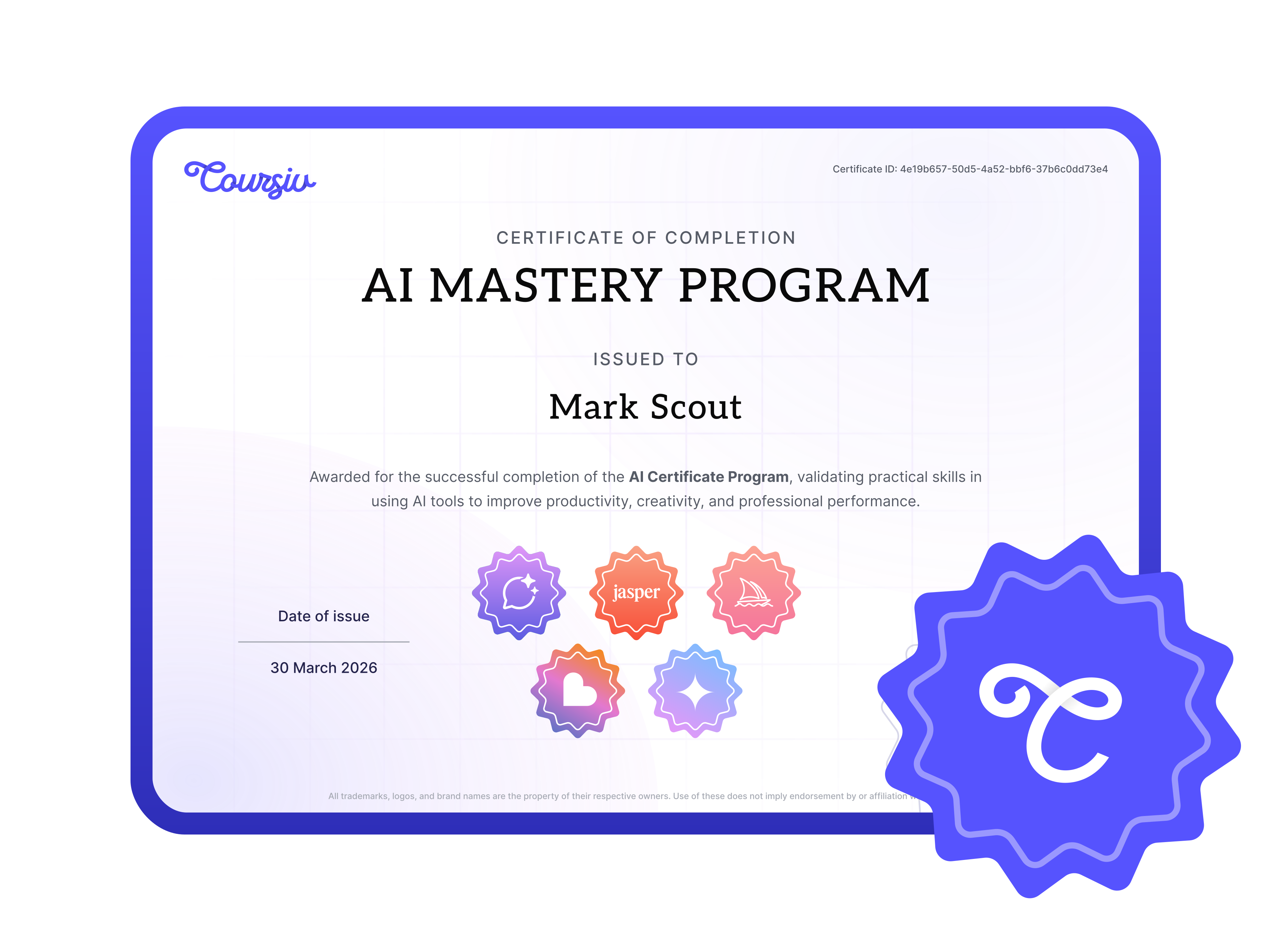
Official Certificate
Earn Your AI Certification
with Coursiv
Complete every module on concept work, documentation, client communication, and portfolio to earn your
Coursiv ChatGPT for Architects certificate.
Add to LinkedIn
Showcase your AI expertise on your professional profile
ChatGPT is strongest as a studio partner across research, specifications, client communication, and
narrative. It does not replace your drawing, modeling, or technical judgment, but it removes large amounts
of adjacent work so you spend more time on the parts that require your design expertise.
ChatGPT is excellent for orientation and precedent research but must not be treated as the final authority
on building codes. The course teaches a verify-then-trust workflow where ChatGPT summarizes and shortlists
references, and you confirm against the official local code before applying anything in a live project.
A full unit is dedicated to Midjourney for architectural visualization — from concept boards through
lighting and materiality studies to proposal imagery. You learn how ChatGPT and Midjourney work as one
toolchain rather than two isolated tools.
Especially so. Solo architects gain the most leverage because the admin and documentation work that
usually eats evenings and weekends is exactly what ChatGPT handles well. The custom GPT module lets you
encode your studio voice so outputs feel like yours.
Only if you use it without curation. The course covers how to pair ChatGPT drafts with your own
project-specific detail, editorial voice, and imagery. The outputs you ship after the program will read as
a sharpened version of your practice, not a generic AI template.
Most architects complete it inside a month at a rhythm of one short lesson per day plus one weekly applied
exercise on a live project. You will have usable outputs for real projects by the end of the first week.
Related courses for architects and design professionals
Practical workflows tailored for architects and design professionals.
ChatGPT for architects: practical certification path
A practice-ready certification that shows architects and design professionals how to use ChatGPT and
Midjourney to accelerate concept work, documentation, and client communication without diluting their studio
voice.
Where AI Actually Helps in an Architectural Practice
Architecture is not a profession that can be fully automated, and that is not what this course tries to do.
The honest leverage of ChatGPT in the studio is in the adjacent work around design — specifications,
schedules, client emails, minutes, proposals, case studies, code research, and narrative writing. Those
tasks routinely eat the hours that should belong to design itself. This program maps ChatGPT and Midjourney
onto the real architectural workflow so the time you reclaim goes back into drawings, details, and client
presence, not further away from them.
Concept Work with ChatGPT and Midjourney Together
Concept development is where this toolchain produces the most surprising results. ChatGPT is excellent at
structuring a design narrative from a brief and a site — working through program, client values, context,
and studio voice. Midjourney is excellent at giving that narrative visual form before you commit modeling
hours. The course shows you how to move between the two in a single afternoon: brief into ChatGPT, narrative
out, imagery prompts generated, Midjourney board produced, commentary refined. The output is a
proposal-grade concept board grounded in a real argument rather than a collection of aesthetic references.
Documentation, Specifications, and Studio Standards
Every practice has its own specification language, its own schedule formats, its own tone for client
letters. This program includes a full unit on building a custom GPT that encodes your studio standards —
past specifications, preferred phrasing, drawing naming conventions, consultant coordination style. Once
that GPT exists, drafting documents for a new project is a matter of briefing rather than writing. The work
you were copy-pasting from previous jobs now generates itself while staying unmistakably yours.
Client Communication and Design Narrative
A substantial part of a senior architect's week is written communication — weekly client updates,
design-rationale emails, meeting minutes, consultant coordination notes, and presentation speaker notes.
This course treats written communication as a designed deliverable in its own right. You will build prompt
templates for each recurring document, with clarity, warmth, and technical precision calibrated per client.
Over a full project, this alone reclaims many hours while improving how clients experience the practice.
Portfolio, Competitions, and Practice Growth
The work that wins the next commission is rarely the work being done for the current commission. Portfolios
and case studies slip. Competition submissions get written the weekend before deadline. This course closes
that gap with a portfolio unit that turns every completed project into case-study content within days of
handover, and a competition module that gives you structured narrative frames for entries. By the end of the
program, practice growth becomes a steady output of your studio work rather than a separate project that
never quite happens.
Ready to master ChatGPT for architects?
Join over 1 million learners on Coursiv.
Build practical AI skills in 30 days with short daily lessons.