ChatGPT for Marketing in 2026

By April 2026, ChatGPT in marketing has moved past the adoption question. The active conversation is how to operationalize ChatGPT without diluting brand, hallucinating into a lawsuit, or paying for tools nobody opens.
This piece is built for that conversation: where ChatGPT wins against the alternatives, where it earns its seat in a marketing workflow, and where it quietly breaks things.
Why Marketers Use ChatGPT for Content, Ads, and Strategy
The generative-AI category has real options now: Claude for long-form reasoning, Gemini for native Google Workspace integration, Copilot for Microsoft 365 shops, Perplexity for research.
But according to the Siege Media report, ChatGPT is still the most trusted AI tool for content marketing. Social Media Examiner 2025 data also shows that ChatGPT dominates overall marketing use at 90%.
Marketers still default to ChatGPT, and three reasons explain it.
The custom GPT ecosystem is unmatched. A marketing team can build one GPT loaded with brand voice rules, another that turns a keyword into a structured SEO brief, and a third that spins a winning Meta ad into ten variants. Each lives in the shared workspace and runs the same way for every user. No competitor offers an equivalent depth of pre-built specialist agents or as low a barrier to building one.
It plays well with the rest of the marketing stack. Ahrefs, Semrush, Sprout Social, HubSpot, and Meta’s Ads platform have all shipped native ChatGPT connectors or MCP integrations. Most marketing SaaS that integrates with one model integrates with ChatGPT first.
Procurement already approved it. ChatGPT Business carries SOC 2 Type 2 and CSA STAR alignment, has no training on business data by default, supports SAML SSO and admin controls, and runs $20 per seat on annual billing (2-seat minimum). For a CMO defending a budget line to legal and IT, that combination clears review faster than any alternative at the price.
The Key Advantage of ChatGPT for Marketing Professionals
The core reason why marketers stay in ChatGPT instead of rotating between specialist tools is usage breadth, not task depth.
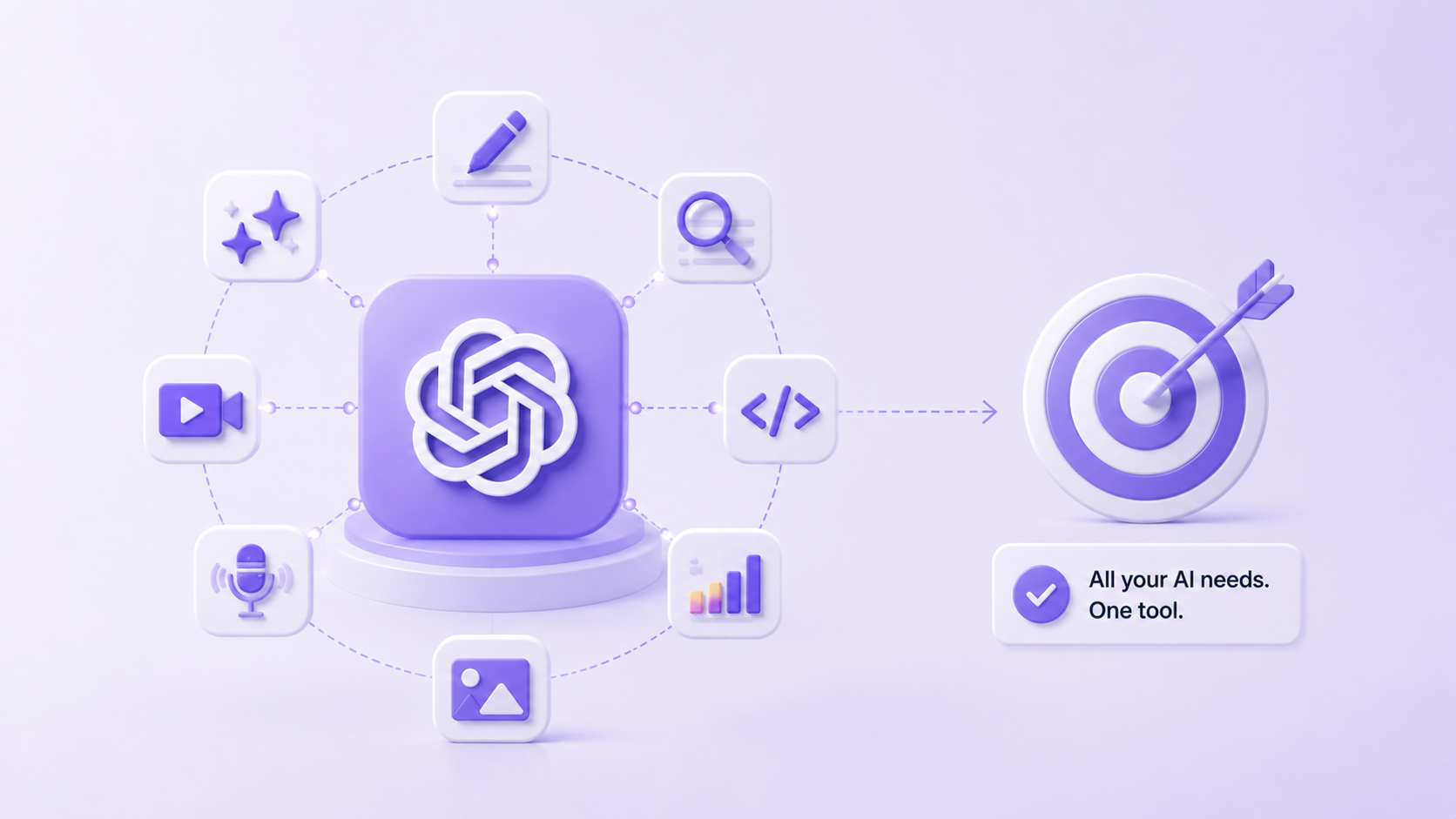
ChatGPT allows users to switch seamlessly between writing, research, coding (build functional apps and automated workflows without a technical background), data analysis, video, voice, and image generation.
Marketers can meet all their AI needs in one tool.
Strengths and Weaknesses of ChatGPT for Marketing
Where ChatGPT Delivers Strong ROI
The highest-ROI use cases share two profiles. One is high-volume creative work where the marketer generates a batch and picks the strongest. The other is high-effort tasks (research, data analysis, code, multimodal assets) that ChatGPT collapses into one prompt and one review pass.
Common Limitations and Marketing Risks
- Hallucinated facts published as truth. ChatGPT can invent statistics, citations, expert names, and competitor details with the same confidence it uses for real claims. When that happens, the brand takes the hit – whether it shows up in a blog post, sales deck, support reply, or research summary.
- Generic, flat output. When every team uses the same tool with similar prompts, content starts to sound the same. By 2026, both audiences and algorithms reward specificity and originality – exactly what AI-drafted copy often removes.
- Sycophancy in strategic work. ChatGPT is designed to agree with the user, which makes it unreliable for the strategic work marketers most want to use it for: pressure-testing positioning, red-teaming a campaign brief, stress-testing claims before they ship.
- Over-reliance erodes in-house craft. When teams default to ChatGPT for drafts, briefs, and analysis, junior marketers stop building judgment from doing the work themselves – how to structure an argument, when a claim needs a source, what makes a headline land. Two years in, you get a team that ships faster but can’t tell when the model is wrong, can’t fix output that misses the brief, and can’t operate when the tool is down or off-limits for a sensitive project.
- Legal and disclosure exposure. AI-generated marketing content increasingly triggers disclosure requirements under FTC endorsement guides, the EU AI Act, and state-level laws, so a marketing team shipping ChatGPT-drafted ads, testimonials, or influencer scripts without proper labeling is creating compliance risk that scales with output volume.
Human Editing and Brand Supervision Best Practices
Establish a mandatory fact-check layer. Every statistic, case study reference, platform claim, or regulatory statement generated by ChatGPT should be verified against primary sources before publication. The practical rule: treat all ChatGPT-generated data as a lead to check, not a citation to use.
Treat brand voice as a competitive moat, not a style preference. MarketingProfs flagged in April 2026 that “maintaining differentiated brand voice in AI-generated content is becoming a competitive priority,” with tools that reflect brand-specific creative judgment helping avoid generic outputs at scale. The implication for editing: brand voice review needs to be a named workflow step, not something the editor catches on a good day.
Lead with proprietary research, original POV, and human-only inputs. Content Marketing Institute’s 42-expert 2026 trends piece argues that brands will compete in AI-driven search by “investing in proprietary research to stand out, leaning into podcasts for their human conversations, and offering what AI can’t: genuine voices, fresh insights, and emotional connection.”
Robert Rose adds that the 2026 edge comes from “depth, not speed.” Editing best practice follows from this: the human pass should add the things AI structurally cannot (proprietary data, first-person experience, named sources, genuine POV), not just polish what AI produced.
Best Ways to Use ChatGPT for Marketing in 2026
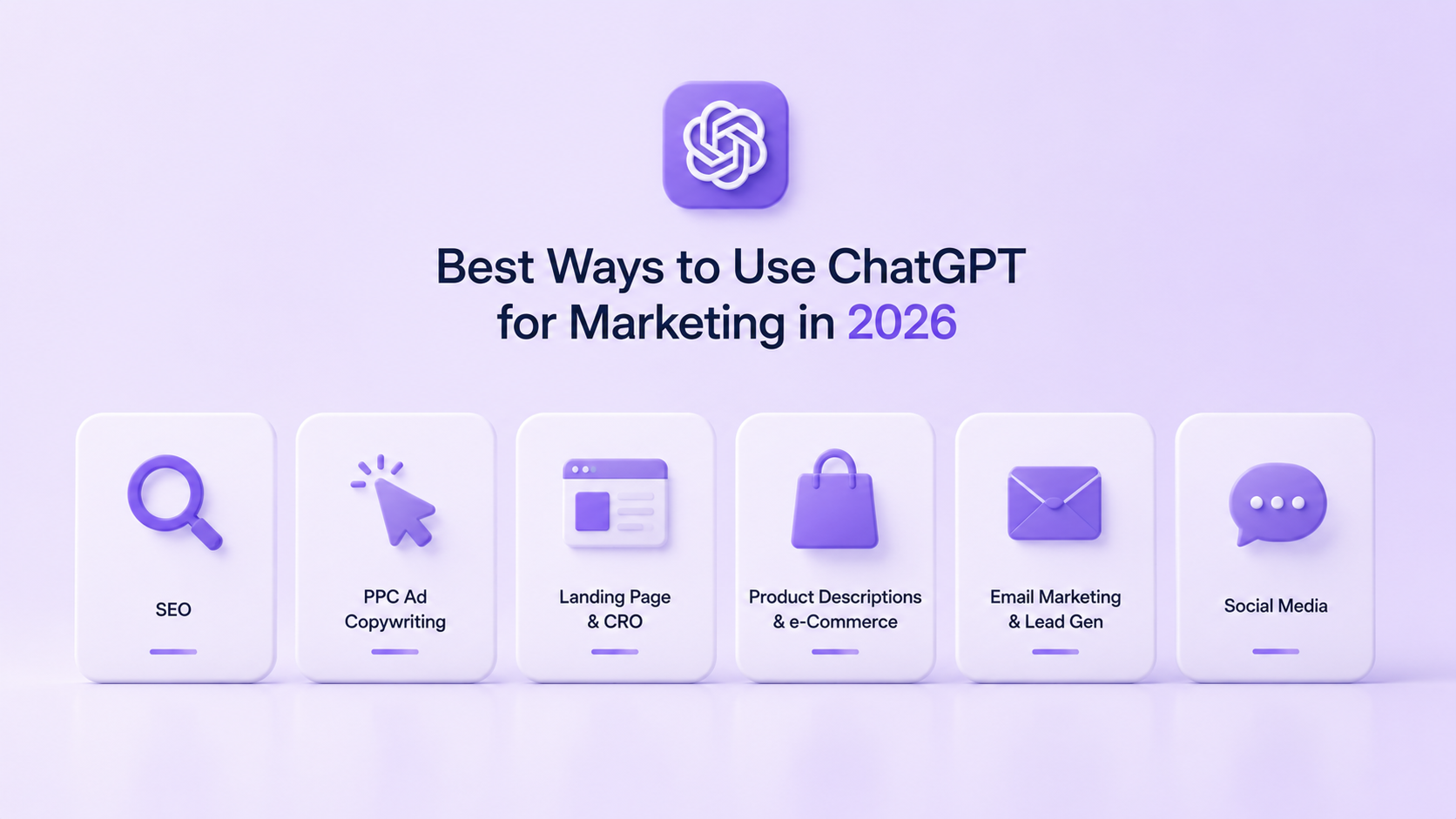
Six use cases concentrate value for marketing teams. The sections after this one cover each one in working detail.
SEO
Keyword clustering, brief writing, topic mapping, and content repurposing across channels. The single highest-leverage area for marketing teams running content programs at any scale.
PPC Ad Copywriting for Google Ads and Meta Ads
Generating dozens of headline and description variants against a defined value proposition, then handing the winners to platform A/B testing.
Landing Page Copy and Conversion Rate Optimization
ChatGPT drafts headline-and-subhead pairs against an audience definition for A/B testing. Canvas and the Apps SDK extend this further: marketing teams build working landing page prototypes without engineering support.
Product Descriptions and e-Commerce Marketing Content
Teams generate or rewrite thousands of product descriptions overnight through Google Sheets and ChatGPT integrations. API costs run a fraction of a cent per page.
Email Marketing and Lead Generation
ChatGPT covers lead magnet drafts, welcome sequence skeletons, sales email personalization layers, and subject line variants for ESP-native A/B testing.
Social Media
Platform-specific custom GPTs for LinkedIn, Instagram, X, and Facebook content; pattern extraction from top-performing past posts; community management at scale via Sprout Social’s native ChatGPT connector.
How to Use ChatGPT for SEO
Keyword Research and SERP Data Analysis
Treat ChatGPT as a layer on top of Ahrefs or Semrush, not a replacement. Export keyword data, paste it into ChatGPT, and ask for clusters by intent. The model surfaces long-tail variations and question-format queries faster than a manual sort. Ahrefs’ MCP integration with ChatGPT closes the loop further: practitioners generate hypotheses, validate against live volume and difficulty data, and iterate inside one chat session.
SEO Content Briefs
Brief writing is the single highest-ROI SEO use case. A structured prompt covers the target keyword, audience, word count, two or three competitor URLs to emulate, and the CTAs the piece should drive toward. Briefs that took two hours now take ten minutes, freeing senior time for editorial direction rather than format-filling.
Topic Clusters and Internal Linking Maps
Ahrefs publishes a workflow that pairs ChatGPT with bulk keyword exports to cluster by intent and map clusters into pillar-and-spoke structures. The Ahrefs MCP-plus-ChatGPT pattern produces a visual of “easy wins” versus “high value” clusters in minutes, replacing what used to be a half-day spreadsheet exercise.
Meta Titles, Descriptions, and On-Page Copy
Treat as a variant generator, not an autopilot. The model produces 20 meta description options in seconds, and a human picks the strongest two or three for A/B testing. Unattended publishing at scale is where teams get burned. Variant volume is the lever.
Repurposing One Piece of Content Across Channels
One pillar post becomes LinkedIn carousels, X threads, an email sequence, and YouTube descriptions inside a single working session. The model handles the structural lift; the human editor applies brand voice on the final pass.
How to Use ChatGPT for Email Marketing and Lead Generation
Lead Magnet Writing and Funnel Copy
ChatGPT handles first drafts of guides, checklists, and gated assets well, especially when the team supplies original data or proprietary frameworks for the model to structure. The model frames; the team supplies the substance.
Welcome Email Sequences and Nurture Campaigns
Build the skeleton, typically five to seven emails, against a defined ICP and customer journey stage. Then human-edit for voice. The model handles structure faster than a human; the human handles whether it sounds like the brand.
Sales Emails and Personalized Outreach at Scale
Split the email into layers. ChatGPT drafts the variable layer (the opener and relevance hook based on prospect data); a human writes the offer and CTA. This keeps personalization scalable and the persuasion accountable.
A/B Testing Subject Lines and CTAs
ChatGPT generates 20 subject line variants in under a minute. The marketer selects the three to five strongest for the audience, and the ESP-native A/B test picks the winner. Variant volume is the lever; selection is the judgment call.
How to Use ChatGPT for Social Media
Instagram, LinkedIn, Facebook, and X Content Ideas
Social Media Examiner’s published workflow with Natalie Lambert, formerly Google’s Global Director of Applied AI for Marketing, who treats custom GPTs as platform-specific specialists: a LinkedIn writer, an Instagram caption writer, each loaded with explicit style guides. Lambert specifically advises against uploading examples, since they go stale quickly.
Viral Hooks, Captions, and Engagement Copywriting
Paste your highest-performing past posts into ChatGPT and ask it to extract the structural pattern (not the topic), then generate ten new posts in that pattern on a different topic. Pattern recognition is what the model does well; topic taste stays with the human.
Community Management and Customer Reply Drafting
Sprout Social’s Q4 2025 release added a native ChatGPT connector that lets marketing teams query their own publishing data in natural language for response drafting and trend analysis. The upgrade over copy-pasting CSVs is meaningful at any reasonable engagement volume.
Influencer Outreach and Partnership Messaging
Draft personalized first-touch outreach against a creator’s recent posts and audience profile. Then a human reads it and decides whether it sounds like a person. If the answer is no, that creator was probably not the right partner anyway.
The Honest Bottom Line
ChatGPT for digital marketing in 2026 is a competent junior marketer that never sleeps, costs $20 a seat, and will confidently invent a statistic if you let it. The teams getting real ROI treat it as exactly that: brief tightly, edit visibly, fact-check ruthlessly, and never let it sign anything in your brand’s name.