Home
›
Courses
› ChatGPT for Therapy Practices: Support Your Clinical Work Responsibly
Mental Health PracticeAI Certification
ChatGPT for Therapy Practices:
Support Your Clinical Work Responsibly
Learn how licensed therapists, counselors, and mental health practitioners can use ChatGPT for notes,
admin, intake, and continuing education — without compromising client care or confidentiality.
Professionals from global companies use Coursiv to build practical AI skills.
8+ hrs
Saved on admin weekly
24
Practice-focused lessons
310+
Practitioners enrolled this week
1
Full responsible-use module
Why most teams underuse ChatGPT
Therapists are drowning in documentation, admin, and business tasks. ChatGPT can give you time back — but
only if you use it responsibly and never in place of clinical care.
This course teaches licensed therapists and counselors how to use ChatGPT for notes structure, intake,
admin, continuing education, and practice operations while protecting client confidentiality and clinical
integrity.
Before responsible AI workflows
Progress notes pile up and compress into late-night catch-up sessions
Intake, policy, and admin templates are copied from outdated examples
Continuing education reading sits untouched for months at a time
Practice marketing and referral materials never get the attention they need
After this ChatGPT for therapy course
De-identified note-structuring workflows give you your evenings back
Intake and admin templates are modern, consistent, and reviewer-ready
Continuing education reading becomes a manageable weekly habit
Your practice has thoughtful marketing and referral content that reflects your work
How therapists, counselors, and mental health practitioners exploring AI-assisted workflows use ChatGPT
after this course
Practical workflows tailored for therapists, counselors, and mental health practitioners exploring
AI-assisted workflows.
De-identified Session Note Drafting
Use ChatGPT to structure progress notes from your own de-identified shorthand into clean SOAP or DAP
formats you then review and finalize.
Time saver
Intake and Admin Templates
Generate intake forms, informed consent language, cancellation policies, and welcome emails your practice
can customize and attorney-review.
Execution
Continuing Education Support
Summarize research articles, build study notes for CE courses, and prepare for certification exams with
structured AI-assisted workflows.
Growth
Session Preparation Prompts
Generate reflective questions, psychoeducation handouts, and homework ideas aligned to evidence-based
modalities — reviewed by you before use.
Popular
Practice Marketing Content
Write thoughtful, non-clinical website copy, newsletters, and referral materials that represent your
practice with clarity and care.
Growth
Client Psychoeducation Handouts
Draft psychoeducation handouts and worksheets grounded in established frameworks, reviewed by you before
sharing with any client.
High impact
Ready to reclaim hours of admin time — responsibly?
Eligibility overview for ChatGPT for therapy learners. Built for practical adoption, not technical
prerequisites.
Section
Candidate Type
Eligible?
Typical Requirement
Notes
Primary fit
Licensed therapists and counselors
Yes
Active license and clinical practice
Primary audience — the course assumes licensure and focuses on non-clinical workflows around your
practice.
Primary fit
Group practice owners and directors
Yes
Responsible for practice operations
Strong fit for standardizing admin, onboarding, and responsible AI use across a team of clinicians.
Primary fit
Private practice solo clinicians
Yes
Run your own practice end-to-end
Helps you reclaim hours on admin, marketing, and continuing education without outsourcing.
Adjacent backgrounds
Graduate-level clinical trainees
Yes
Under supervision of a licensed clinician
Useful for building responsible AI habits early — with supervisor oversight for any practice-related
use.
Adjacent backgrounds
Clinical supervisors
Yes
Train and supervise other clinicians
Helps you teach your supervisees how to adopt AI responsibly in their non-clinical workflows.
Adjacent backgrounds
Coaches and allied wellness professionals
Yes
Not operating as licensed therapists
Adjacent fit — you will need to adapt clinical-specific content to your own professional scope and
ethics.
Experience level
Early-career clinicians
Yes
1–3 years post-licensure
Course introduces responsible AI practices from the start of your professional admin life.
Experience level
Established practitioners
Yes
4–15 years in practice
Best fit — the admin time savings are most impactful when layered onto a mature practice.
Experience level
Senior clinicians and practice leaders
Yes
15+ years, often leading groups
Useful for shaping team-wide responsible-use policies and practice-wide AI standards.
Course Modules
3 units · 32 lessons · ~6 hours total duration
Lesson 1 - Understanding ChatGPT's Role in a Clinical Practice
Explore understanding chatgpt's role in a clinical practice and leave with outputs you can
bring straight to your team.
Lesson 2 - Which ChatGPT Features Are Appropriate for Practice Use
Explore which chatgpt features are appropriate for practice use and leave with outputs you can
bring straight to your team.
Lesson 3 - Voice Mode
Put voice mode into practice with hands-on exercises drawn from real chatgpt scenarios.
Lesson 4 - ChatGPT & Apps
Apply chatgpt & apps directly to your role with step-by-step guidance tailored for therapists,
counselors, and mental health practitioners exploring AI-assisted workflows.
Lesson 5 - Image Generation With ChatGPT
Tackle image generation with chatgpt with a proven approach that saves time and reduces common
mistakes.
Lesson 6 - Stay Organized: Projects
Put stay organized: projects into practice with hands-on exercises drawn from real chatgpt
scenarios.
Lesson 7 - Custom GPTs for Practice Admin, Never for Clinical Decisions
Develop your skills in custom gpts for practice admin, never for clinical decisions through guided
modules designed for working professionals.
Lesson 8 - Automating Non-Clinical Practice Admin Responsibly
Gain hands-on experience with automating non-clinical practice admin responsibly using prompts and
templates built for therapists, counselors, and mental health practitioners exploring AI-assisted
workflows.
Lesson 9 - Drafting Non-Clinical Client Communication
Deliver drafting non-clinical client communication that is clear, persuasive, and ready for
stakeholders.
Lesson 10 - Literature Review and Continuing Education Support
Cover literature review and continuing education support end to end and walk away with a reusable
playbook for your workflow.
Lesson 11 - Preparing for Trainings, Workshops, and Group Programs
Tackle preparing for trainings, workshops, and group programs with a proven approach that saves
time and reduces common mistakes.
Lesson 12 - Organizing Personal Finances
Tackle organizing personal finances with a proven approach that saves time and reduces common
mistakes.
Lesson 13 - Practice Website, Newsletter, and Blog Content
Tackle practice website, newsletter, and blog content with a proven approach that saves time and
reduces common mistakes.
Lesson 14 - Bring a Creative Idea to Life
Develop your skills in bring a creative idea to life through guided modules designed for working
professionals.
Lesson 1 - Meet Claude
Get started with claude and understand the core capabilities available to you.
Lesson 2 - Working with Projects
Cover working with projects end to end and walk away with a reusable playbook for your workflow.
Lesson 3 - Create with Artifacts
Create with artifacts with structured prompts and a repeatable QA process.
Lesson 4 - Reflective Questions for Case Conceptualization (De-identified)
Gain hands-on experience with reflective questions for case conceptualization (de-identified)
using prompts and templates built for therapists, counselors, and mental health practitioners
exploring AI-assisted workflows.
Lesson 5 - Summarizing Treatment Frameworks for Continuing Education
Implement summarizing treatment frameworks for continuing education so your work stays consistent
across projects and team members.
Lesson 6 - Creativity Stimulation
Break down creativity stimulation into clear steps you can execute within a single work week.
Lesson 7 - Professional Writing: Articles, Bios, and Referral Letters
Apply professional writing: articles, bios, and referral letters directly to your role with
step-by-step guidance tailored for therapists, counselors, and mental health practitioners
exploring AI-assisted workflows.
Lesson 8 - Synthesizing Research on Modalities and Interventions
Tackle synthesizing research on modalities and interventions with a proven approach that saves
time and reduces common mistakes.
Lesson 9 - Reviewing Your Own Practice Materials Critically
Cover reviewing your own practice materials critically end to end and walk away with a reusable
playbook for your workflow.
Lesson 10 - Combining Claude with Your Practice Management Stack
Explore combining claude with your practice management stack and leave with outputs you can bring
straight to your team.
Lesson 1 - The Business Side of a Clinical Practice
Put the business side of a clinical practice into practice with hands-on exercises drawn from real
ai for business operations scenarios.
Lesson 2 - Market and Referral Research for Your Practice
Tackle market and referral research for your practice with a proven approach that saves time and
reduces common mistakes.
Lesson 3 - Non-Clinical Practice Metrics: Bookings, No-Shows, Billing
Use non-clinical practice metrics: bookings, no-shows, billing to make faster, more informed
decisions and demonstrate clear ROI.
Lesson 4 - Planning Your Caseload, Pricing, and Services
Learn how planning your caseload, pricing, and services fits into your broader workflow and where
it delivers the highest value.
Lesson 5 - Supervision and Peer Consultation Prep (De-identified)
Get actionable takeaways from supervision and peer consultation prep (de-identified) that you can
use in your next work session.
Lesson 6 - Powerful Presentations & Storytelling
Deliver powerful presentations & storytelling that is clear, persuasive, and ready for
stakeholders.
Lesson 7 - Referral Partners and Professional Network Communication
Deliver referral partners and professional network communication that is clear, persuasive, and
ready for stakeholders.
Lesson 8 - Ethics, HIPAA, and Responsible AI Use in Practice
Navigate ethics, hipaa, and responsible ai use in practice with clear policies that protect both
your team and your users.
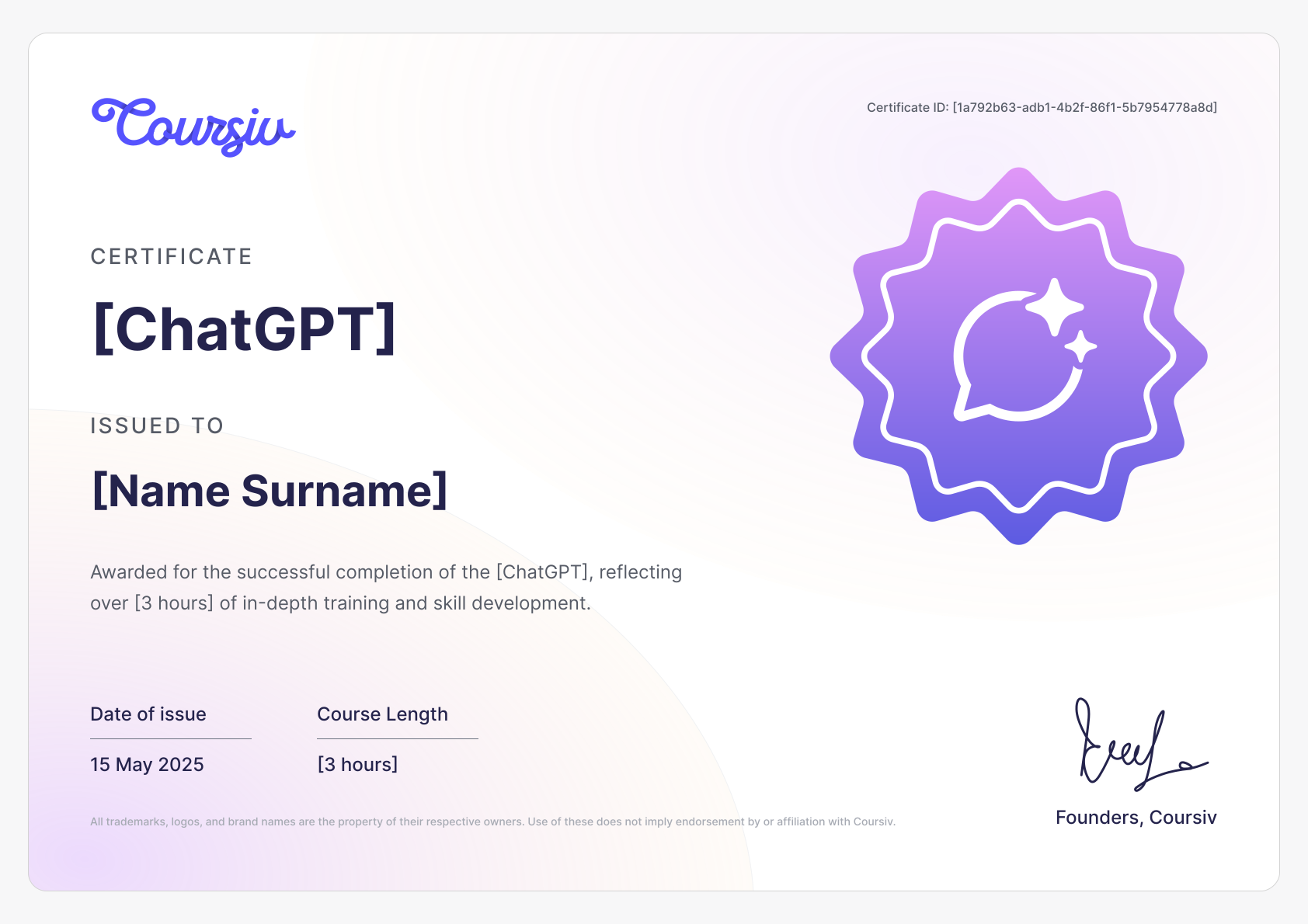
Official Certificate
Earn Your AI Certification
with Coursiv
Complete the admin, continuing education, practice operations, and responsible-use modules to earn your
Coursiv certificate in responsible AI use for therapy practices. The certificate covers non-clinical
applications only.
Add to LinkedIn
Showcase your AI expertise on your professional profile
No. ChatGPT is not a therapist and cannot replace the clinical judgment, training, licensure, and
therapeutic relationship that licensed practitioners provide. This course is explicitly about using
ChatGPT to support the work around your practice — notes, admin, continuing education, session prep, and
business operations — not to treat clients.
No. Identifiable client information — names, session content, contact details, diagnoses linked to
identity — should never go into a consumer ChatGPT session. The course teaches you exactly what counts as
de-identified, how to use ChatGPT with only de-identified or generic content, when enterprise or
HIPAA-eligible tools become relevant, and what to document for your own compliance records.
An entire unit is dedicated to responsible use in clinical contexts: HIPAA considerations, state licensing
board expectations, informed consent updates when AI is part of your admin workflow, and the clear
distinction between acceptable admin use and inappropriate clinical use. The program does not constitute
legal advice and you should confirm specifics with your supervisor, attorney, and licensing board.
No, and explicitly so. ChatGPT is not reliable or appropriate for diagnosis, assessment, crisis response,
or treatment planning for identifiable clients. The course is clear about this boundary throughout and
focuses exclusively on non-clinical, admin, educational, and practice-management applications.
Licensed therapists, counselors, social workers, psychologists, and graduate-level trainees operating
under supervision — including LMFTs, LCSWs, LPCs, psychologists, and similar roles. If you run or are
building a practice and want to responsibly adopt AI for the non-clinical parts of your work, this program
is built for you.
Yes. Completing the modules and the final practice-workflow assignment earns you a Coursiv certificate in
responsible AI use for therapy practices. The certificate reflects training in admin, business, and
educational applications of ChatGPT — not in clinical AI use.
Related courses for therapists, counselors, and mental health practitioners exploring AI-assisted workflows
Practical workflows tailored for therapists, counselors, and mental health practitioners exploring
AI-assisted workflows.
A responsible-use ChatGPT for therapy course built for licensed therapists and counselors. Learn how to apply
ChatGPT to notes structure, intake, admin, continuing education, and practice operations — while never using
it as a replacement for clinical judgment, diagnosis, or treatment.
What This ChatGPT for Therapy Course Actually Teaches
Let us be precise from the start: this course is for licensed therapists, counselors, and mental health
practitioners who want to use ChatGPT to support the non-clinical parts of their work. It is not a course
about delivering therapy through ChatGPT, replacing clinical judgment with AI, or using AI to diagnose or
treat identifiable clients. Every module is framed around admin, business, and educational use — notes
structure from your own de-identified shorthand, intake and policy templates, continuing education
summaries, psychoeducation drafts you review before use, and practice marketing. ChatGPT is a tool for the
work around your practice. The therapeutic relationship, the clinical decisions, and the duty of care remain
entirely yours.
Why ChatGPT Is Not a Substitute for Therapy
This point is important enough that an entire unit of the course is dedicated to it. ChatGPT does not have
clinical training, licensure, or the capacity for a genuine therapeutic relationship. It cannot reliably
assess risk, recognize crisis, apply evidence-based modalities with clinical nuance, or hold the relational
container that therapy requires. Using ChatGPT as a stand-in for therapy is not only clinically
inappropriate — for licensed practitioners, it risks violating your scope, your licensing board's standards,
and your duty of care. This course reinforces that boundary in every module and teaches you how to
communicate it clearly to clients if they ask whether ChatGPT can replace sessions.
Confidentiality, HIPAA, and Protecting Your Clients
Client confidentiality is the single most important constraint on AI use in a therapy practice. Consumer
ChatGPT is not a HIPAA-covered tool, and identifiable client information should never be entered into a
prompt. The course teaches you what counts as truly de-identified versus superficially anonymized, how to
work with de-identified shorthand when structuring notes, when enterprise or HIPAA-eligible tools become
relevant, how to update informed consent if AI plays any role in your admin workflow, and how to document
your AI use for your own records and any future licensing board or audit review. None of this constitutes
legal advice — you should confirm specifics with your own attorney, supervisor, and licensing board — but
the course gives you a defensible baseline to work from.
Responsible Admin Use: Notes, Intake, and Practice Operations
The core of the course focuses on the places where ChatGPT genuinely helps a therapist: structuring your own
de-identified shorthand into clean progress note formats that you review and finalize, drafting intake forms
and welcome emails, preparing psychoeducation handouts grounded in established frameworks that you review
before sharing, writing referral letters and professional bios, summarizing research for continuing
education, and running the business side of your practice more efficiently. Every workflow is designed with
a human-in-the-loop review step and explicit reminders about what stays out of the prompt window.
Earn a Responsible-Use Certificate for Your Therapy Practice
Completing the program earns you a Coursiv certificate in responsible AI use for therapy practices. The
certificate reflects training specifically in admin, business, and educational applications of ChatGPT — not
in using AI for diagnosis, assessment, or treatment. You can add it to your practice website, professional
profile, or supervision record as evidence that you have invested in learning how to use AI responsibly in a
clinical setting. The goal of the program is simple: give licensed therapists and counselors practical time
back on admin while keeping every clinical decision firmly where it belongs, with you and your client.
Ready to master ChatGPT for therapy?
Join over 1 million learners on Coursiv.
Build practical AI skills in 30 days with short daily lessons.