You open a blank document. Deadline in two hours. The words aren’t coming out right – too stiff, too vague, or just wrong. You reach for an AI tool. But which one? The one that fixes your commas, or the one that can rewrite your entire argument from scratch?
This question, Grammarly or ChatGPT, has quietly become one of the most practically important decisions writers, marketers, students, and professionals face in 2026. And the answer isn’t as obvious as you might think.
Both tools are genuinely impressive. Both have improved dramatically over the past two years. But they were built with fundamentally different purposes in mind, and using the wrong one for the wrong job is a bit like bringing a scalpel to a construction site. Let’s break it all down.
Key Factors to Consider When Choosing an AI Chatbot for Writing
Before you even open a comparison chart, it helps to ask what you actually need. Because “AI writing tool” covers an enormous range of use cases, and conflating them leads to frustration.
Are you looking for something to clean up your existing prose? Or do you need a creative partner who can generate ideas, restructure arguments, and write full drafts? Do you need it embedded in your browser, your email client, or your Google Docs? Or are you fine switching tabs?
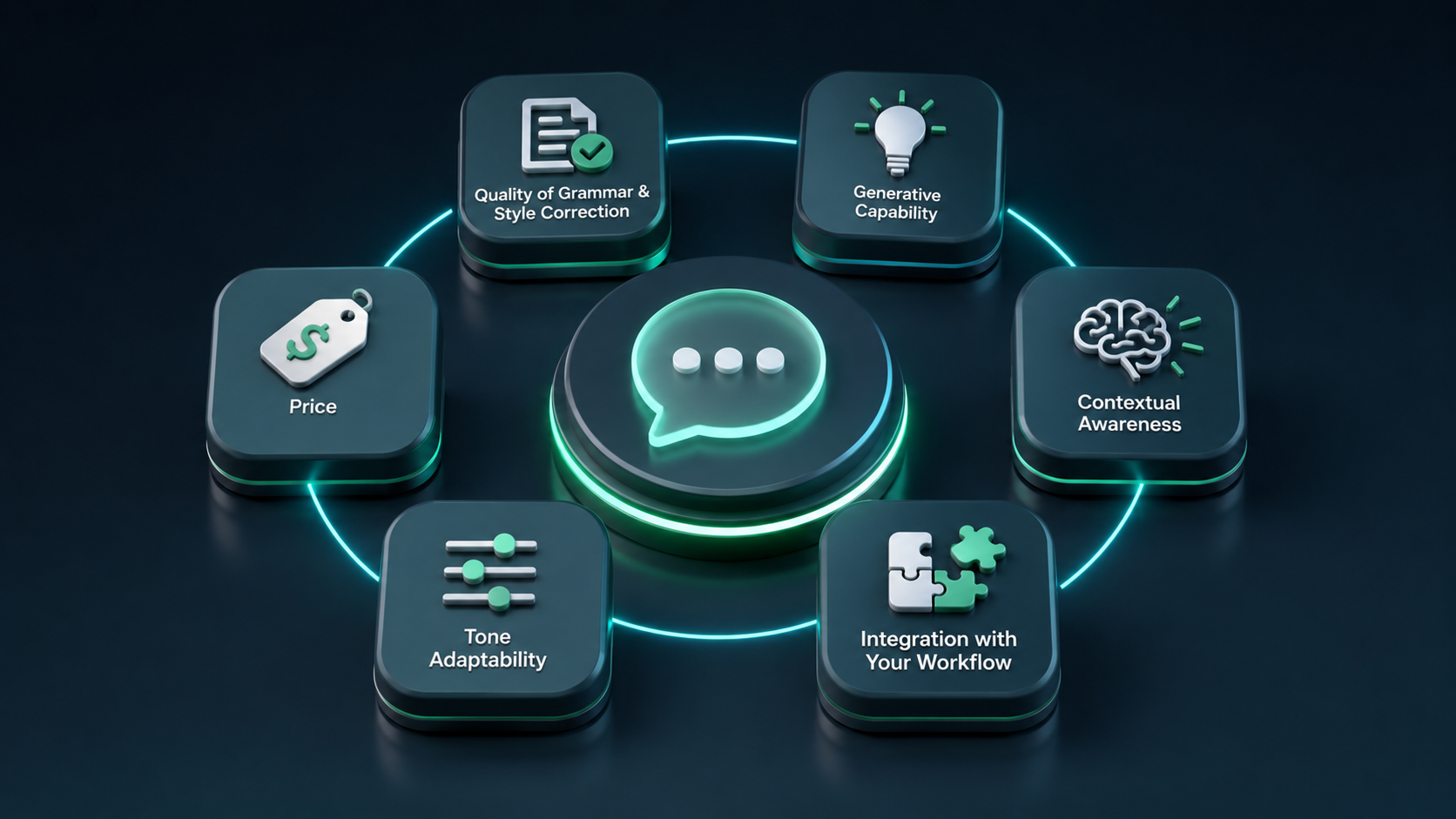
The key factors worth weighing are quality of grammar and style correction, generative capability, contextual awareness, integration with your existing workflow, tone adaptability, and, yes, price.
Generative AI Capabilities in Writing
This is where the two tools part ways most dramatically. Grammarly is, at its core, an editor – an exceptionally sophisticated one, but still reactive by design. It responds to what you’ve already written.
ChatGPT is a generative model. Ask it to write a 600-word op-ed on climate policy, draft a cover letter, or invent a fictional world – it will. That creative generation capability is something Grammarly simply wasn’t designed to do. Grammarly has added generative features in recent versions, but its roots, and its strengths, remain firmly in correction and refinement.
Comparison of Grammarly and ChatGPT for Writing in 2026
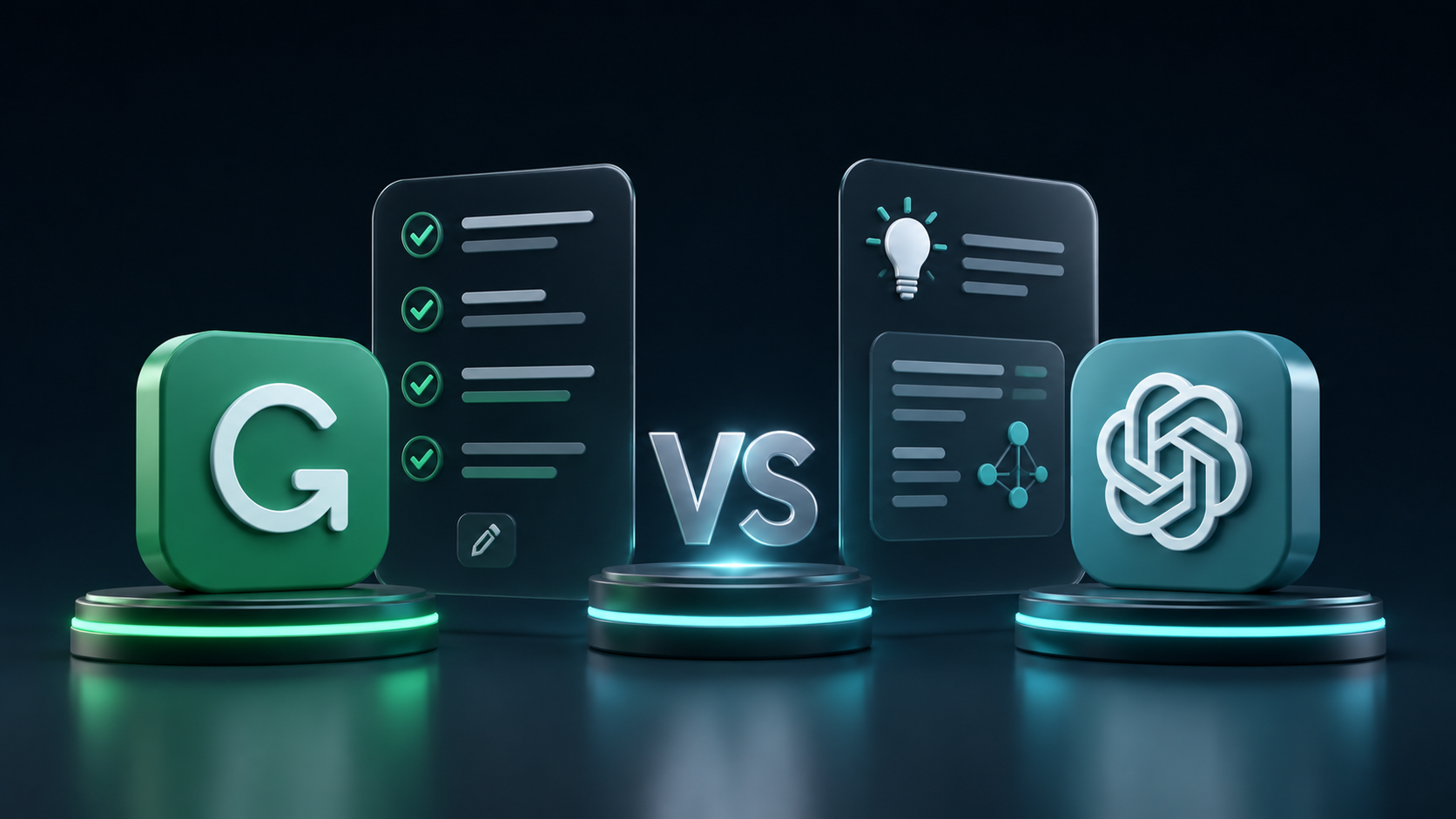
Head-to-head, these two tools are not the same when you stress-test them across specific writing tasks. Here’s what the real-world experience with Grammarly vs ChatGPT differences looks like, category by category.
Effectiveness of Sentence and Paragraph Rewrites
Grammarly excels at sentence editing. It identifies awkward expressions, excessive passive voice, wordy constructions, and dangling modifiers with unparalleled accuracy. The 2024-2025 updates provide deeper semantic analysis, so it doesn’t just point out grammatical errors but truly understands what you meant to say.
ChatGPT’s rewrites are not only more polished and linguistically diverse but also often more intelligent than the original. However, they have special requirements. ChatGPT can rephrase a sentence without proper guidance, potentially losing your original meaning, something Grammarly almost never does. Grammarly outperforms ChatGPT in terms of sentence-level accuracy. ChatGPT will lead the way in bold and innovative rewriting.
Tone Detection and Adjustments
Grammarly’s tone detection has become one of its headline features. It reads your email and tells you it sounds “confident” or “slightly aggressive” – and it’s usually right. For professional communication specifically, this is genuinely useful.
ChatGPT handles tone through instruction rather than detection. Tell it to write formally, warmly, sarcastically, or like a 1920s newspaper reporter – and it delivers. The flexibility is unmatched. But you have to know what you want and ask for it explicitly, which isn’t always how people work when they’re in the middle of writing something.
Suggestions in Context
Context-awareness is where things get genuinely interesting. Grammarly’s business plan allows users to set goals – audience, formality, domain – and suggestions adapt accordingly. Legal documents get different treatment than social media posts. ChatGPT, given context in the prompt (“I’m writing for a technical B2B audience unfamiliar with jargon”), adjusts fluidly. Neither is perfect. Grammarly can miss industry-specific nuance; ChatGPT can over-adapt and produce something that no longer sounds like you.
Integration Capabilities
This is Grammarly’s undisputed strong suit. It integrates natively with over 500,000 apps and websites – Gmail, Google Docs, Microsoft Word, Slack, LinkedIn, and dozens more. You don’t think about it; it’s just there, correcting as you type.
Since 2023, ChatGPT has been integrated in various ways, including access to Copilot (which uses GPT-4) as a Microsoft 365 extension. However, even when editing the source text in real time, ChatGPT requires numerous copy-and-paste operations. When integrated into workflows, Grammarly is much more convenient.
Plagiarism Detection – Importance for SEO
A special feature of Grammarly Premium is its plagiarism checker, which compares billions of web pages. This feature is especially important for content marketers, bloggers, and students, as even now Google disapproves of low-quality or duplicate content.
ChatGPT has no plagiarism detection. In fact, the reverse concern exists: AI-generated text can sometimes reproduce phrasing patterns common enough to trigger plagiarism flags in other tools. For SEO-focused writing teams, Grammarly’s built-in checker adds real value – ChatGPT doesn’t even try to compete here.
Pricing Models
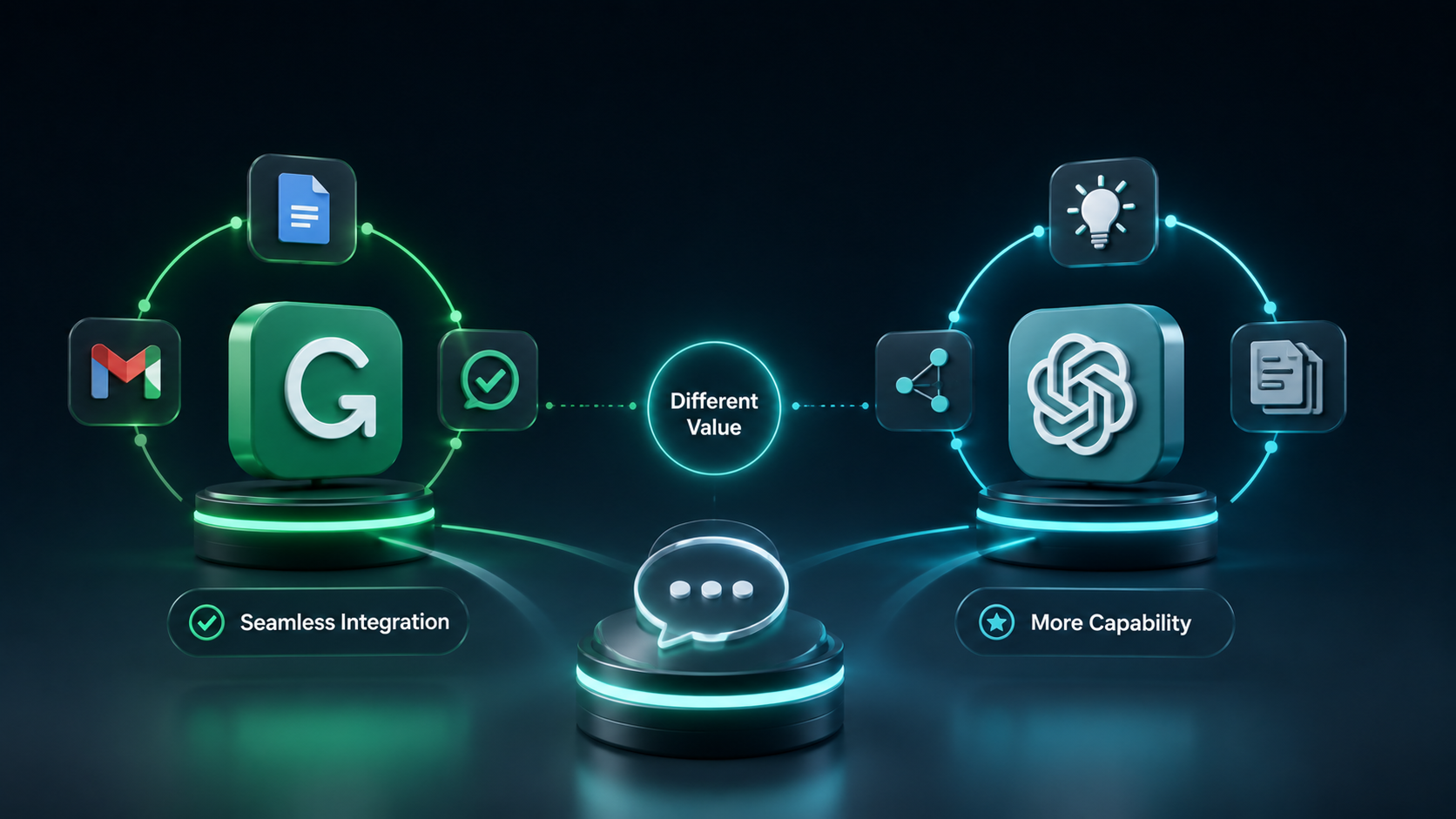
Grammarly offers a free tier with basic grammar checking, Premium at around $12/month (billed annually), and a Business plan for teams. ChatGPT Free gives access to GPT-4o with usage limits; ChatGPT Plus runs $20/month and removes most restrictions, offering faster responses and access to newer models.
For the price, ChatGPT Plus arguably offers more raw capability. But Grammarly’s value is deeply tied to integration – if you live in Google Docs and Gmail, $12/month for frictionless, always-on editing is a different kind of value proposition.
Core Features of Grammarly
Grammarly isn’t just a spell-checker anymore – it hasn’t been for years. The 2025-2026 version is a full writing assistant with some genuinely sophisticated capabilities under the hood.
- Real-time grammar, spelling, and punctuation correction across all major platforms and browsers
- Advanced style suggestions: conciseness, clarity, word choice, sentence variety
- Tone detector with suggestions to adjust emotional register in emails and messages
- Plagiarism detection (Premium) against billions of indexed web pages
- Writing goals: set your audience, intent, formality level, and domain for personalized suggestions
- Generative text features (GrammarlyGO) for drafts, replies, and rewrites – though this remains a secondary strength
The breadth of integration remains Grammarly’s defining advantage – there is simply no other editing tool as deeply embedded in the daily digital writing environment of most professionals.
Core Features of ChatGPT
ChatGPT in 2026 is a fundamentally different product from the one that launched in late 2022. It’s conversational, context-aware over long exchanges, and capable of working across text, images, code, and data.
- Full text generation: drafts, essays, scripts, marketing copy, technical documentation, fiction
- Deep editing and rewriting when prompted – can handle entire documents if pasted in
- Multi-turn conversation memory: maintains context across a long writing session
- Custom GPTs: users can create specialized writing assistants with pre-loaded instructions and styles
- Web browsing and real-time information retrieval (Plus/Pro plans)
- Code generation and data analysis alongside text – useful for technical writers and product teams
The sheer versatility is the point. ChatGPT is less a writing tool and more a writing partner – one that can brainstorm, challenge your arguments, help you research, and produce polished drafts, all in the same conversation.
Differences in Goals Between Grammarly vs ChatGPT
This is the conversation most “ChatGPT vs Grammarly comparison” skip, and it’s the most important one. Grammarly and ChatGPT are not trying to solve the same problem.
Grammarly’s goal is to make your writing better. It assumes you have something to say and helps you say it more clearly, correctly, and appropriately. It is fundamentally a tool of refinement.
ChatGPT’s goal is to help you produce content – whether that’s starting from nothing, expanding a rough idea, or completely reimagining an existing piece. It is a tool of creation and transformation.
These different philosophies mean that criticizing Grammarly for not writing full articles is like criticizing a surgeon for not building hospitals. Dismissing ChatGPT for lacking comma rules completely misses the essence. Once you internalize this distinction, the comparison becomes a lot more useful.
Grammarly vs ChatGPT: Scenarios and Use Cases
The real test is situational. Here’s how each tool performs in actual, everyday writing contexts.
When to Use Grammarly
Grammarly shines when your writing exists, and you need someone to catch what you missed. It’s the tool you want when:
You are writing business emails and you want to be sure that the tone will be received. You are working on a document that you have put so much effort into and you do not wish to impart your voice to a generative model. You are not native English and you need an efficient and prompt correction without distorting your flow. You are either a student or a professional who requires plagiarism insurance before handing in assignments.
The better choice would also be Grammarly when you are writing on the go in several bursts on various platforms throughout the day, Grammarly is ambient and persistent and you do not have to think about it.
When to Use ChatGPT
ChatGPT is the right choice when you need to generate content, not just correct errors. Reach for it when:
You’re staring at a blank page and a deadline is approaching. You need to quickly produce a large draft. You’re working on a complex text and need a partner who can quickly respond to your ideas. You want to explore different stylistic approaches to the same content—different tones, structures, and target audiences.
ChatGPT is also uniquely useful for research-related writing tasks—for example, summarizing sources, synthesizing multiple documents, or creating content that requires timely online information.
User Preferences: Survey Insights on Grammarly vs ChatGPT
Usage patterns are interesting. Grammarly boasts over 40 million daily users by 2025, and this number, remarkably, has never decreased, despite ChatGPT’s global reach. This suggests that the two tools aren’t literally “cannibalizing” each other, as might appear in a direct comparison.
In mid-2024, ChatGPT reached 200 million weekly active users, a figure publicly confirmed by OpenAI. More tellingly, surveys of professional writers and content teams consistently show that a significant portion of respondents use both tools, not just one.
Grammarly remains most popular among students engaged in academic writing, likely due to its plagiarism detector and the reduced likelihood of AI-generated content, which could trigger detection tools. ChatGPT is more popular among marketers and content creators for idea generation and early drafts. This includes the use of Grammarly during the finalization stage.
Comparing Output Quality – Grammarly vs ChatGPT
Output quality is context-dependent, but some patterns hold up consistently across different types of content and different users.
Conversational Capabilities of ChatGPT
ChatGPT’s conversational quality is genuinely impressive in 2026. The latest GPT-4o model handles nuanced, extended writing sessions with a coherence that earlier versions lacked. It remembers what you said three exchanges ago, adjusts based on your feedback, and can hold a consistent style across a 3,000-word document if you guide it carefully.
This makes it remarkably effective for collaborative writing – not just autocomplete, but actual back-and-forth development of ideas. That said, it can drift. Leave it unsupervised on a long piece, and it may gradually shift tone, repeat ideas, or introduce inaccuracies that aren’t obvious without careful review.
Limitations of Grammarly in Creative Writing
In the field of fiction, Grammarly’s model reveals its limitations. Its recommendations focus on clarity and correctness, which is potentially detrimental to fiction, where the goal is usually to break rules.
A novelist who writes in fragments, uses unconventional punctuation, or employs deliberate repetition for rhythm will find Grammarly flagging stylistic choices as errors. You can disable suggestions selectively, but it requires manual management. GrammarlyGO’s generative features help somewhat, but they feel bolted on rather than native. For creative work, ChatGPT’s flexibility is simply more appropriate.
Users’ Trust in Grammarly
Trust is an unusual metric for a software tool, but it matters here. Grammarly has spent over fifteen years building a reputation as a reliable, non-intrusive writing assistant. It doesn’t generate content; it corrects it. This distinction has earned it a specific kind of trust – the trust of someone who wants help, not replacement.
Enterprise adoption reflects this. Grammarly Business is used by thousands of companies – including some of the world’s largest – precisely because teams can rely on it to improve communication without concern about generated content muddying authorship or introducing factual errors.
Privacy is also a concern. Grammarly previously had weaknesses in data management but now offers comprehensive privacy policies and corporate data security agreements. For many companies, such openness trumps pure expertise, building trust and ensuring compliance with data protection standards.
ChatGPT’s Popularity
ChatGPT’s rise remains one of the fastest product adoption rates in tech history. Within two months of its launch, it reached a record 100 million users and continues to grow. OpenAI has stated that by 2025, the number of weekly active users on its websites will exceed 200 million.
The cultural footprint is significant too. ChatGPT has become a reference point in conversations about AI, education, work, and creativity in a way that no previous consumer
AI product achieved. It’s on the news, in classrooms, and in boardrooms. That visibility has translated directly into trial and, for many users, into habit.
The challenge for ChatGPT is converting that scale into deep, specific use-case loyalty. Grammarly has it for professional editing. ChatGPT’s user base is broader but more varied in how, and how regularly, people actually use it.
The Hybrid Approach – Using Both ChatGPT & Grammarly Together
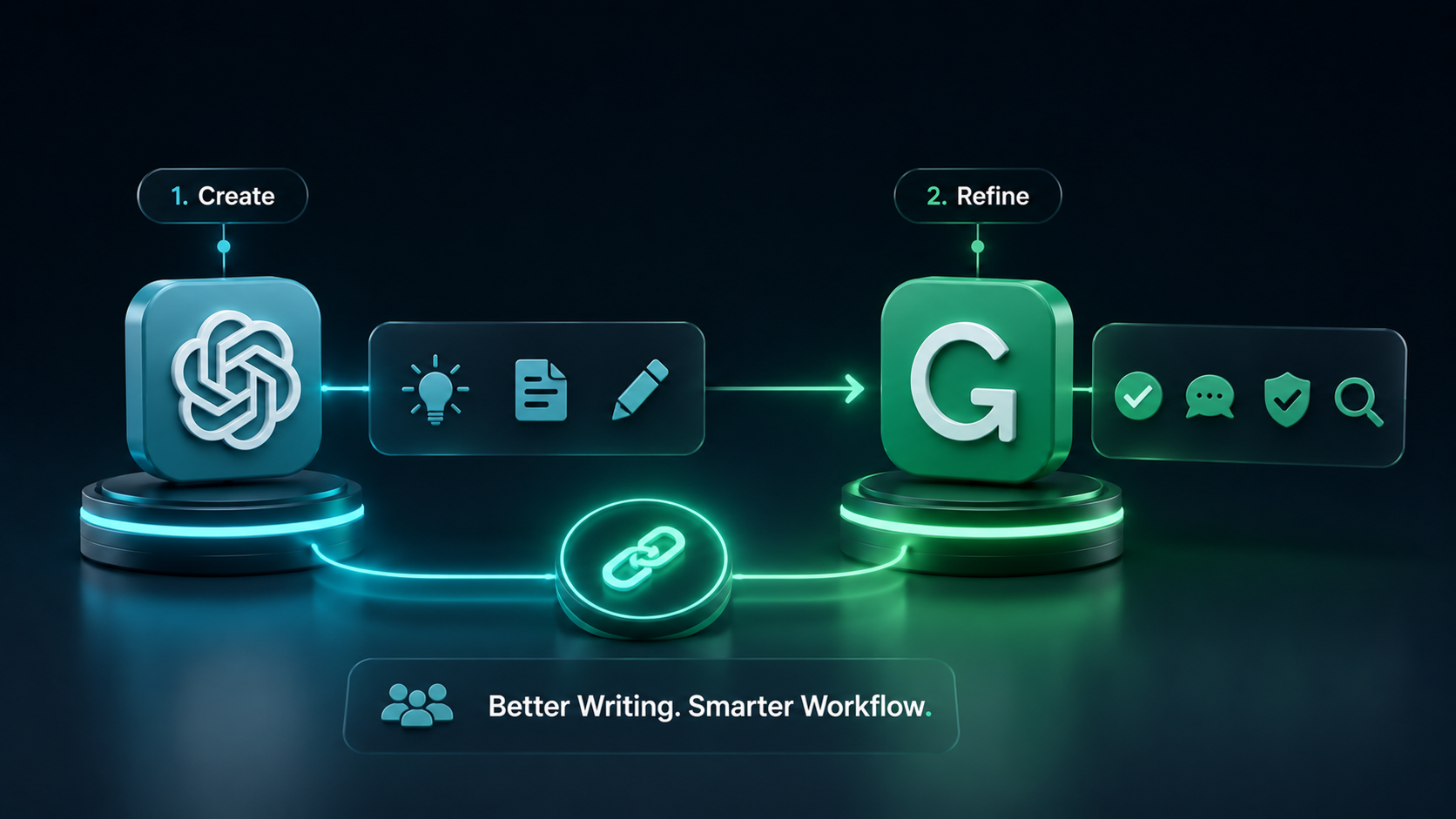
Here’s the thing nobody puts in the headline: the smartest approach in 2026 isn’t choosing between Grammarly and ChatGPT. It’s using both, deliberately, at different stages of the writing process.
The workflow looks something like this: use ChatGPT to break through the blank-page problem – brainstorm, outline, generate a rough first draft. Then bring that draft into your actual writing environment and let Grammarly do what it does best: clean up the grammar, catch inconsistencies, flag tone issues, and run a plagiarism check before you publish or submit.
This is a genuinely powerful creative workflow. ChatGPT handles the messy generative phase; Grammarly handles the precise editorial phase. The combined cost is around $32/month, which for any professional whose writing impacts their work is a reasonable investment.
Content agencies, marketers, and prolific bloggers have been quietly running this two-tool stack for a while now. It’s about using the right tool for each part of the job.
Which AI Tool Is Best for Writing?
The honest answer to the “Grammarly vs ChatGPT for writing” question: it depends on what “best” means to you.
If you write a lot of professional communication – emails, reports, documentation – and you want real-time, frictionless correction that integrates everywhere, Grammarly is better. It stays out of your way, improves your output, and works across the tools you already use.
If you need to generate content, explore ideas, draft from scratch, or work across varied writing tasks with a flexible, intelligent partner, ChatGPT is better. It requires more active engagement but offers dramatically more creative range.
Do you want the best possible writing workflow, available in 2026? Use both. Let ChatGPT be your creative engine and Grammarly be your editorial filter. Together, they cover the full writing process in a way neither can alone.
The competition between these tools is real and healthy – it’s driven both products to improve faster than they might have otherwise. But from a user perspective, they’re more complementary than competitive. Writers who understand this are already ahead.
FAQ
Is Grammarly obsolete after ChatGPT?
Is it okay to use AI for paraphrasing?
Does Grammarly get flagged as AI?
What is the disadvantage of using Grammarly?
Should I use Grammarly or ChatGPT?