For adjacent reading, see Gemini vs ChatGPT, Microsoft Copilot vs ChatGPT, and best AI chatbots for writing.
There’s a question that keeps coming up in tech circles, at kitchen tables, and basically everywhere people use the internet: should I Google this, or just ask ChatGPT? It sounds simple. It isn’t. In 2026, the line between a search engine and an AI chatbot has blurred in ways nobody fully predicted – and both tools have quietly reinvented themselves while most people weren’t paying close attention.
Google AI Mode vs ChatGPT Basics in 2026
What is Google AI in search?
Google didn’t just bolt some AI onto its existing search. Starting in 2023 and accelerating through 2024–2025, Google redesigned its search experience around what it calls AI Overviews – synthesized, paragraph-style summaries that appear above the traditional blue links. By 2026, this has expanded into a full “AI Mode,” a conversational layer built directly into Search that lets users ask follow-up questions, refine their queries, and get generated answers alongside source citations.
It runs on Gemini, Google’s in-house large language model family. And no, it’s not ChatGPT.
What is ChatGPT search?
ChatGPT – made by OpenAI – launched its web search feature in late 2023 and has been steadily improving it since. By 2026, ChatGPT (especially in its paid tiers) can browse the live web in real time, pull from current news sources, and respond with cited, up-to-date information. It’s still a chatbot at heart, but one that’s gotten surprisingly good at functioning like a research assistant.
Is Google AI the same as ChatGPT?
No – and this confusion causes real headaches. Google AI Overviews and ChatGPT are both powered by large language models, but they’re built by competing companies, trained differently, integrated into entirely different products, and optimized for different use cases. Google uses Gemini. OpenAI uses GPT-4o and its successors. The underlying architecture is similar in category – transformer-based generative AI – but the execution, training data, and product philosophy diverge significantly.
Google Search vs AI chatbot: the key difference
Here’s the clearest way to think about it: Google is fundamentally an index of the web with AI layered on top. ChatGPT is fundamentally a language model with web access bolted on. That distinction – which came first, the index or the intelligence – shapes almost everything about how each tool behaves.
What Is the Difference Between ChatGPT and Google – How Each Search System Works
How Google search works in 2026
What is the difference between google AI and ChatGPT? First of all, Google’s core engine still crawls and indexes hundreds of billions of web pages, evaluating them across roughly 200 known ranking signals – things like backlink authority, page experience, content freshness, E-E-A-T (Experience, Expertise, Authoritativeness, Trustworthiness). That foundation hasn’t disappeared. What’s changed is what gets served on top of those results.
AI Mode generates answers using Gemini, which is grounded in Google’s index. It’s not hallucinating from memory alone – it’s reading indexed sources and synthesizing a response in real time. Traditional blue links still exist and are often shown alongside or below AI-generated content.
How ChatGPT search works in 2026
ChatGPT’s search function works differently. When you ask a question that requires current information, the model triggers a live web search, fetches relevant pages, reads them, and incorporates what it finds into its response. It’s more like a researcher who steps out to check sources than a database that’s constantly pre-indexed.
This makes it highly responsive to very recent events – but also means it’s only as good as the pages it happens to pull from in that moment.

How Google AI Overviews generate answers
Google’s AI Overviews use a process called retrieval-augmented generation (RAG). The model queries Google’s own index, retrieves relevant documents, and generates a synthesized summary. Citations are embedded in the response, linking back to source pages. The system is designed to ground its answers in real content – though it has made high-profile errors since launch, particularly with niche or ambiguous queries.
How ChatGPT browses the web and uses sources
When ChatGPT performs a live search, it uses Bing’s search infrastructure (part of a partnership between OpenAI and Microsoft) combined with direct page fetching. The model reads the actual content of web pages – not just snippets – and uses them to build its answer. Citations appear inline. The process is slower than a standard Google query but often produces more conversational, synthesized answers.
Traditional search engine vs generative AI search
Traditional search gives you a map. Generative AI gives you a guided tour. The map is more reliable for navigating yourself; the tour is faster if you trust the guide. Neither metaphor is perfect, and in 2026, most power users find themselves flipping between the two depending on what they need.
Accuracy and Reliability of Search Results
Which is more accurate: Google or ChatGPT?
Both get things wrong. The types of errors differ. Google’s AI Overviews have been caught synthesizing incorrect information from real sources – so the sources exist, but the synthesis is faulty. ChatGPT can hallucinate entirely, generating plausible-sounding but fabricated information, especially on obscure topics where its training data is thin and no good live sources are found.
For straightforward factual queries – “What’s the capital of Portugal?”, “When did World War II end?” – both are reliable. The problems surface at the edges: complex, nuanced, or very recent topics.
How Google handles facts, sources, and ranking signals
Google’s advantage is its index. It has direct access to one of the largest, most continuously updated repositories of web content in existence. Its ranking algorithms have been refined over 25+ years. When AI Overviews go wrong, it’s usually not because the source doesn’t exist – it’s because the model misread or misrepresented it.
How ChatGPT handles reasoning, summaries, and citations
ChatGPT’s strength is synthesis and reasoning. It can take a complex multi-part question and work through it step by step in a way that Google’s snippet-style results often can’t match. When it has good source material to work from, its summaries are often clearer and more useful than a page of links.
When Google is better for fact-checking
- You need to verify a specific claim with primary sources
- You want to see multiple perspectives from different publications
- The topic is highly localized (local business hours, regional news)
- You want to navigate directly to a specific website
When ChatGPT is better for quick explanations
Need to understand why something works the way it does? Or you want to explore a topic you know nothing about and don’t want to click through ten pages? ChatGPT shines here. It’s particularly useful for explaining technical concepts, summarizing long documents, or helping you form the right questions before you dive deeper.
Search Experience Comparison
Google search experience: speed, results, and depth
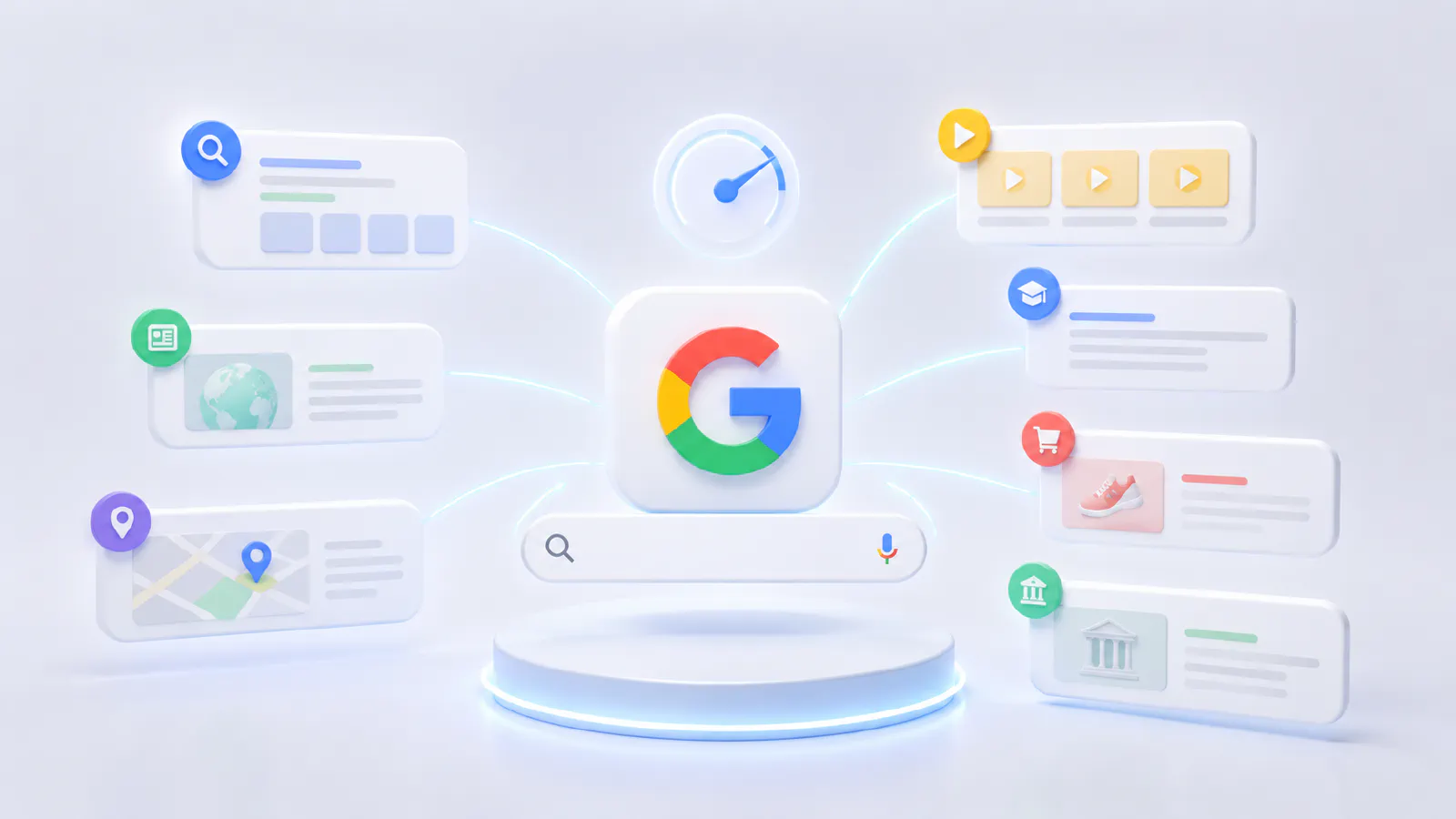
Google is still faster. A standard Google query returns results in under a second – AI Overviews included. The depth of results is unmatched: images, news, maps, video carousels, knowledge panels, shopping results, and academic sources all appear within the same interface. For research that requires breadth – understanding a landscape rather than getting one answer – Google’s format remains hard to beat.
ChatGPT search experience: conversation, context, and follow-up questions
ChatGPT’s real edge is memory within a conversation. You can ask a question, get an answer, then say “now explain that more simply” or “how does that apply to someone in my industry?” – and it carries the context forward. Google’s AI Mode is building toward this, but ChatGPT has had a head start, and the conversational flow still feels more natural.
For people doing exploratory research, working through a complex problem, or just wanting to talk through something rather than scan links, ChatGPT’s format is genuinely more satisfying.
Google vs ChatGPT: Strengths and Weaknesses
Pros of Google Search
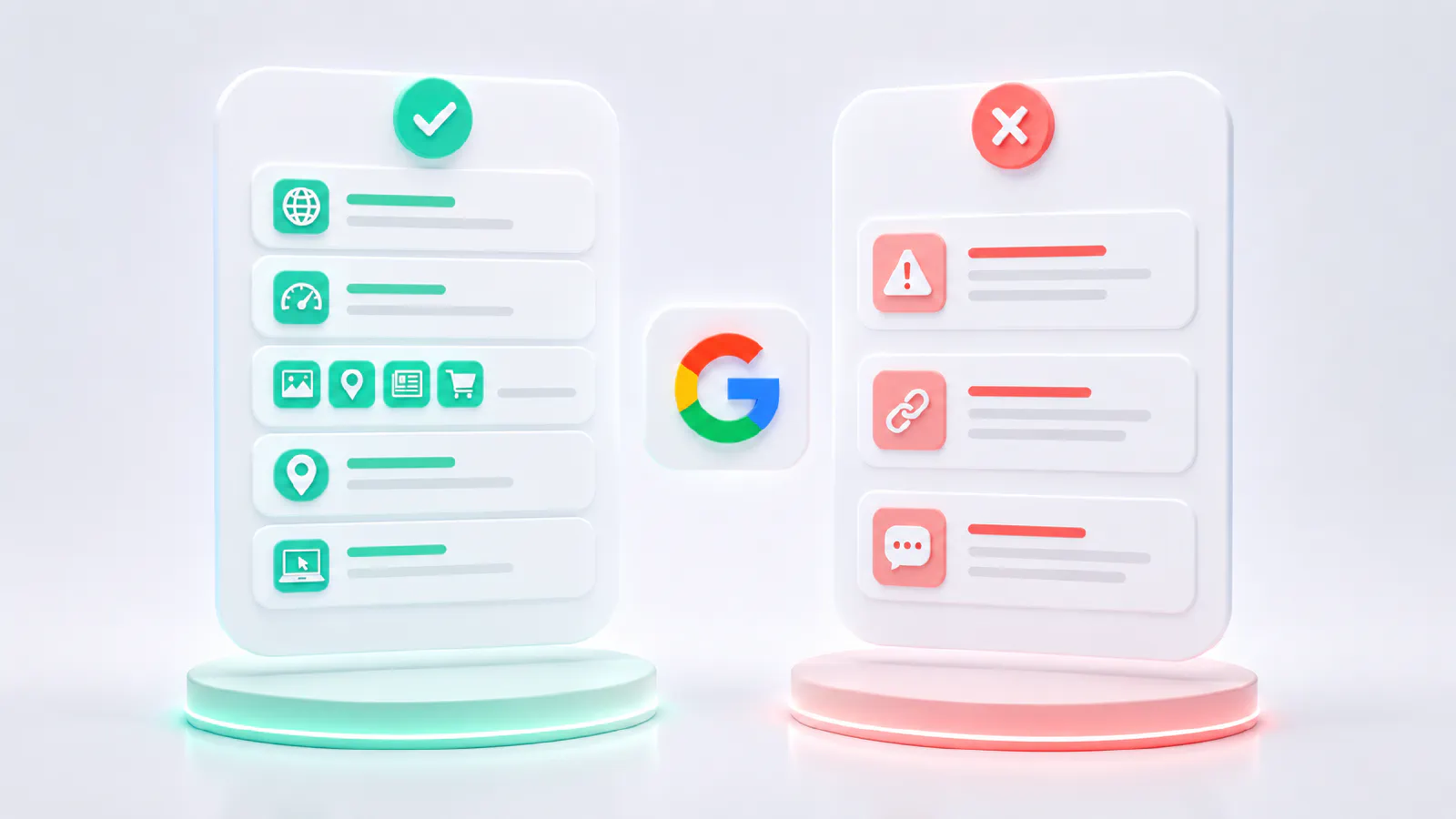
- Massive, continuously updated index of the live web
- Faster query response times
- Broader result formats (images, maps, news, shopping)
- Better for localized and time-sensitive queries
- Higher reliability for navigational searches (finding specific websites)
Cons of Google Search
AI Overviews have introduced new failure modes that didn’t exist in the link-list era. The synthesis layer can misrepresent sources. Heavy AI integration has also changed the experience for users who preferred direct links – sometimes you have to scroll further to find them. And for conversational, multi-step research, the interface still feels more transactional than dialogic.
Pros of ChatGPT Search
Conversational depth is the headline. ChatGPT remembers what you asked five messages ago and can build on it. For complex or exploratory queries, the ability to follow up without starting over is genuinely valuable. It also tends to produce more readable, synthesized prose rather than forcing users to visit multiple pages.
Cons of ChatGPT Search
Hallucination risk is real and not fully solved. Slower than Google for simple queries. The free tier has limitations on how frequently it can perform live web searches. And for queries where you need to browse multiple original sources yourself, the summarized format can actually obscure more than it reveals.
Frequently Asked Questions About Google vs ChatGPT
Is ChatGPT smarter than Google?
“Smarter” depends entirely on the task. ChatGPT reasons better in conversation and handles synthesis more fluidly. Google has access to a larger, fresher information index. They’re different kinds of intelligent. Neither wins categorically.
Are people really using ChatGPT instead of Google?
Yes, meaningfully so. Usage data from multiple analytics platforms shows that a significant segment of users – particularly younger, tech-comfortable demographics – now use ChatGPT as a first stop for research-style queries. Google still handles far more total searches globally, but its share of “answers I could have gotten from a chatbot” queries is declining.
What should you never ask Google Assistant?
This question typically refers to privacy-sensitive queries – things like medical symptoms, financial situations, or personal legal issues – where voice search data may be logged and where nuanced, context-aware answers matter more than a list of links. For these, a private, thoughtful AI conversation often serves better.
Is Google more accurate than ChatGPT?
For real-time, source-verifiable facts – yes, typically. Google grounds its answers in indexed pages that you can cross-check. ChatGPT’s live search has improved accuracy significantly, but its base model can still confuse things when web search isn’t triggered. Neither is infallible; both should be treated with healthy skepticism on high-stakes queries.
Does Google use ChatGPT?
No. Google has its own large language model family – Gemini – developed internally. Google and OpenAI are direct competitors. Google Search does not use ChatGPT at any layer.
Does ChatGPT use Google?
No. When ChatGPT does web searches, it uses Bing (Microsoft’s search engine) as its primary search backend, reflecting the pre-existing investment relationship between Microsoft and OpenAI. It does not query the Google index.