
Last updated: June 30, 2026
Anthropic released Claude Sonnet 5 on June 30, 2026, positioning it as the most agentic Sonnet model so far. The short version: Sonnet 5 is designed to bring more Opus-like coding, tool use, browser work, and professional-task performance into a cheaper Sonnet-class model.
Quick answer: Claude Sonnet 5 is available now in Claude, Claude Code, and the Claude Platform API. Anthropic says it is the default model for Free and Pro plans and is also available to Max, Team, and Enterprise users. For developers, the API model name is claude-sonnet-5. Launch pricing is $2 per million input tokens and $10 per million output tokens through August 31, 2026. After that, standard pricing is $3 per million input tokens and $15 per million output tokens.
Review verdict: Claude Sonnet 5 looks like the new default Claude model for everyday professional work, AI agents, and coding. It is a major upgrade over Claude Sonnet 4.6, especially for multi-step work where the model needs to plan, use tools, check outputs, and finish the task. Claude Opus 4.8 still matters for the highest-accuracy work, but Sonnet 5 is now much closer to Opus-class performance at a lower price.
This guide is based on Anthropic’s Claude Sonnet 5 launch post, the Claude Sonnet 5 System Card, and Anthropic’s Claude API model documentation. Availability, pricing, and API aliases can change, so check Anthropic’s docs before making production changes.
Key takeaways
- Release date: Claude Sonnet 5 launched on June 30, 2026.
- Developer: Anthropic.
- Model family: Claude Sonnet.
- API model name:
claude-sonnet-5. - Claude app availability: default for Free and Pro; available to Max, Team, and Enterprise users.
- Claude Code: available in Claude Code for coding-agent workflows.
- Launch API pricing: $2 / million input tokens and $10 / million output tokens through August 31, 2026.
- Standard API pricing: $3 / million input tokens and $15 / million output tokens after the launch period.
- Main upgrade: stronger agentic execution, coding, tool use, web/search work, computer-use tasks, and professional deliverables.
- Main comparison: clearly stronger than Sonnet 4.6; closer to Opus 4.8, but still generally below Opus 4.8 on the hardest accuracy-sensitive tasks.
- Safety update: lower overall undesirable behavior than Sonnet 4.6 in Anthropic’s pre-deployment evaluations, with cyber safeguards enabled by default.
- Cost caveat: Anthropic says Sonnet 5 uses an updated tokenizer, so the same text can become roughly 1.0x to 1.35x as many tokens depending on content type.
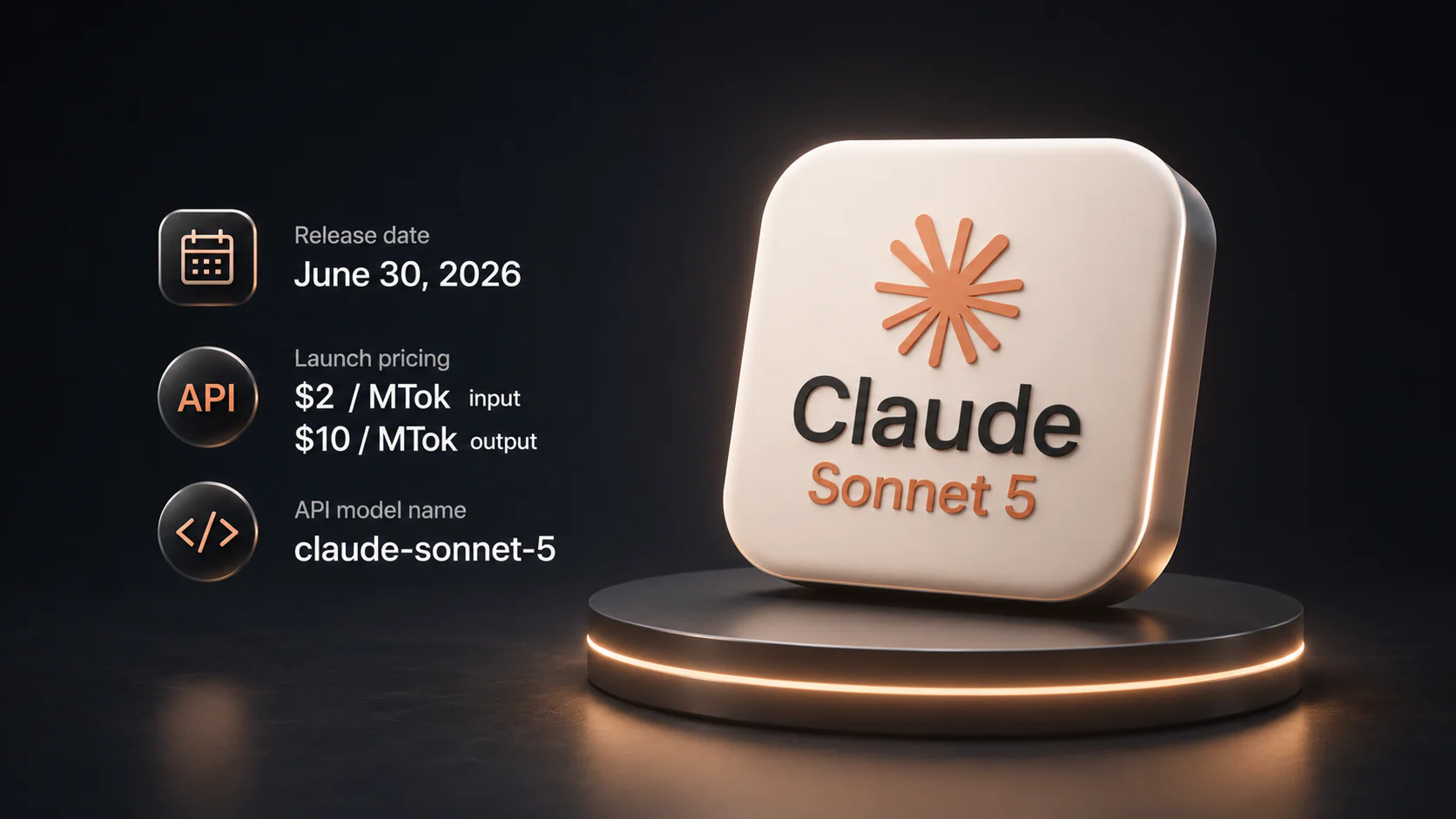
Claude Sonnet 5 quick facts
| Detail | Claude Sonnet 5 |
|---|---|
| Release date | June 30, 2026 |
| Developer | Anthropic |
| Model class | Sonnet-class Claude model |
| API model name | claude-sonnet-5 |
| Best for | Coding, AI agents, Claude Code, web research, tool use, computer-use workflows, professional documents, analysis |
| Claude app access | Default for Free and Pro; available to Max, Team, and Enterprise |
| Claude Code access | Yes |
| Launch API price | $2 / MTok input; $10 / MTok output through August 31, 2026 |
| Standard API price | $3 / MTok input; $15 / MTok output after launch pricing ends |
| Opus comparison | Lower price; Opus 4.8 remains stronger for highest-accuracy tasks |
| Sonnet 4.6 comparison | Stronger on coding, search, tool use, agentic safety, and professional-task benchmarks |
| Safety posture | Cyber safeguards enabled by default; lower undesirable behavior than Sonnet 4.6 in Anthropic evaluations |
What is Claude Sonnet 5?
Claude Sonnet 5 is Anthropic’s newest Sonnet model. Sonnet is the middle of the Claude lineup: usually more capable than small, low-cost models, but cheaper and faster than premium Opus-class models.
The important difference with Sonnet 5 is that Anthropic is no longer presenting Sonnet as merely the “good enough” cheaper model. Sonnet 5 is built for agentic work: tasks where the model must make a plan, use tools, read files, browse, run commands, write or edit code, check the result, and continue without constant user correction.
That makes Sonnet 5 especially relevant for:
- software engineering agents;
- Claude Code users;
- browser and terminal automation;
- web research agents;
- business workflow automation;
- data analysis and spreadsheet tasks;
- legal, finance, healthcare, and professional-document workflows;
- long-running tasks where cheaper models tend to stop halfway.
In plain English: Claude Sonnet 5 is the model you test first when you want Opus-like follow-through but do not want Opus-level cost.
Claude Sonnet 5 release date and availability
Claude Sonnet 5 was released on June 30, 2026. Anthropic announced same-day availability across its main Claude surfaces.
| Surface | Claude Sonnet 5 availability |
|---|---|
| Claude Free | Default model, according to Anthropic’s launch post |
| Claude Pro | Default model |
| Claude Max | Available |
| Claude Team | Available |
| Claude Enterprise | Available |
| Claude Code | Available |
| Claude Platform API | Available as claude-sonnet-5 |
Account-level rollout can still vary by plan, admin settings, region, provider, and rate limit tier. If you do not see Sonnet 5 in your model picker immediately, check your workspace settings, Claude Console model list, or organization admin controls.
Claude Sonnet 5 API model name
The API model name listed in Anthropic’s launch post is:
claude-sonnet-5
For prototypes, that alias is convenient. For production systems, verify Anthropic’s current model documentation and consider whether your application needs a pinned dated model version if Anthropic exposes one in the Console or API docs.
A simple migration path is:
- Duplicate your current Sonnet 4.6 evaluation suite.
- Run the same prompts and tool workflows with
claude-sonnet-5. - Compare task success rate, token usage, latency, refusal behavior, and cost.
- Move low-risk traffic first.
- Keep Opus 4.8 as a fallback for tasks where Sonnet 5 still misses important edge cases.
Claude Sonnet 5 pricing
Claude Sonnet 5 has temporary launch pricing, then standard Sonnet pricing.
| Period | Input price | Output price |
|---|---|---|
| Launch pricing through August 31, 2026 | $2 / million tokens | $10 / million tokens |
| Standard pricing after August 31, 2026 | $3 / million tokens | $15 / million tokens |
For comparison, Anthropic’s launch post lists Claude Opus 4.8 at $5 / million input tokens and $25 / million output tokens in the cost-performance discussion. That gives Sonnet 5 a clear price advantage for high-volume agent workloads.
There is one important cost caveat: Anthropic says Sonnet 5 uses an updated tokenizer. The same input can turn into roughly 1.0x to 1.35x as many tokens depending on the content. In other words, the per-token price is lower than Opus, but you should still measure real prompts rather than estimating only from old Sonnet 4.6 token counts.
What is new in Claude Sonnet 5?
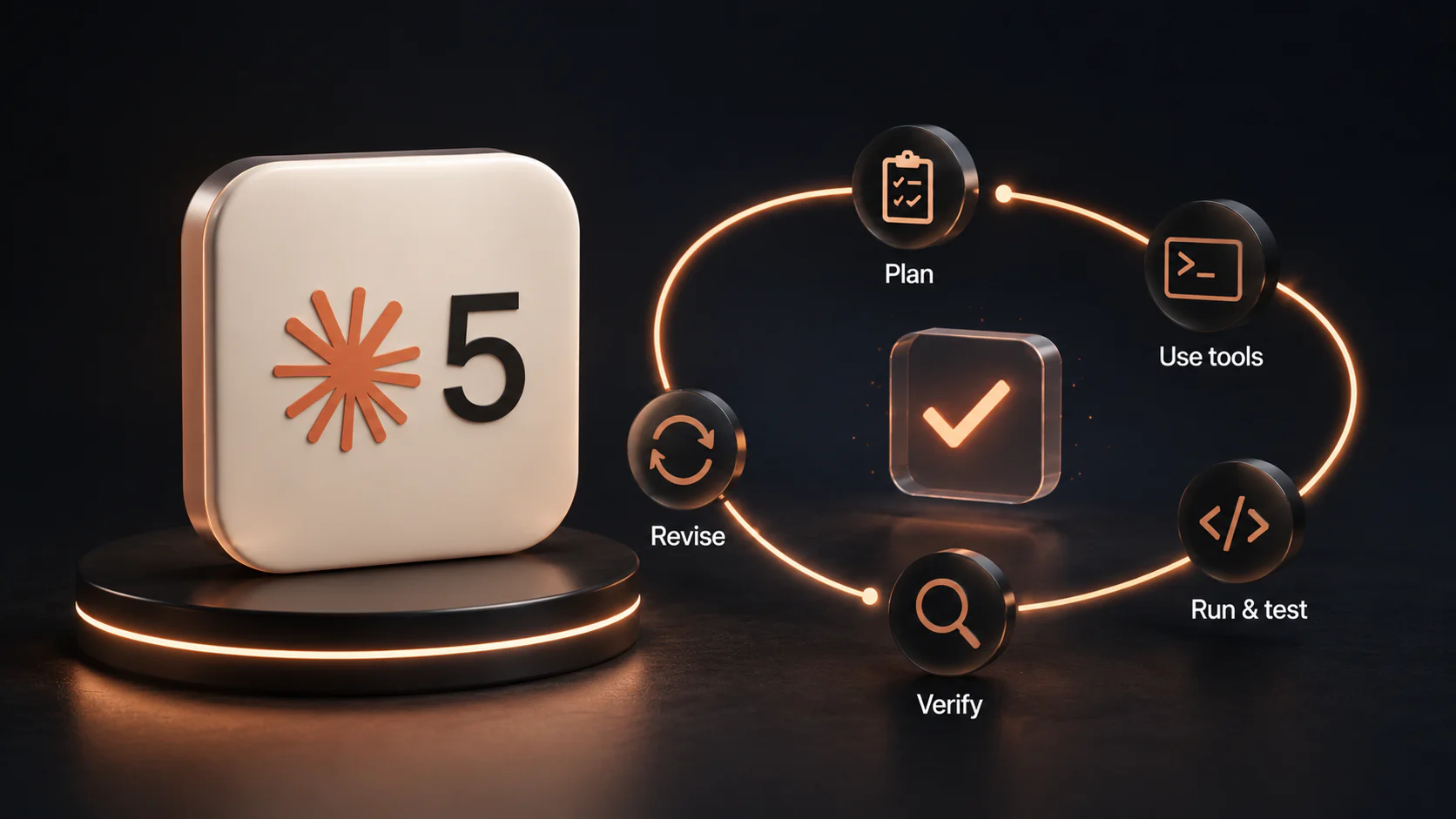
More agentic follow-through
The headline improvement is not just “better answers.” It is better task completion.
Sonnet 5 is built for workflows where the model has to keep going: inspect a codebase, make a plan, call tools, run tests, revise the plan, and verify the result. Anthropic’s early-access examples emphasize cases where Sonnet 5 finished multi-step tasks that older Sonnet models often abandoned or only partially completed.
That matters because agent failures are often boring but expensive. The model does not need to make a dramatic mistake to waste time. It only needs to stop too early, forget a requirement, skip verification, or patch a symptom instead of finding the root cause.
Better coding and Claude Code performance
Sonnet 5 is a major coding upgrade over Sonnet 4.6. In Anthropic’s system card, Sonnet 5 improves on several software-engineering benchmarks, including SWE-bench, Terminal-Bench, CursorBench, FrontierCode, and ProgramBench.
The practical benefit is strongest for real codebase work:
- debugging a failing test;
- tracing a bug across multiple files;
- generating a regression test before a fix;
- making changes in a brownfield repository;
- following local conventions;
- using terminal tools;
- checking whether the implemented change actually solves the issue.
This does not mean you should merge Sonnet 5 code without review. It means Claude Code and other coding agents should have a better default execution model than Sonnet 4.6.
Better cost-performance against Opus 4.8
Claude Opus 4.8 is still the stronger model for many high-accuracy tasks. But Sonnet 5 narrows the gap.
Anthropic’s cost-performance charts compare Sonnet 5, Sonnet 4.6, and Opus 4.8 at different effort levels. The practical interpretation is simple: Sonnet 5 now covers much of the value zone that previously required Opus, while Opus remains the option for maximum accuracy at a higher price.
For teams, that suggests a model-routing strategy:
- use Sonnet 5 for default agent and coding work;
- use Opus 4.8 when accuracy matters more than cost;
- route only the hardest failed or ambiguous cases to Opus;
- measure the break-even point with your own tasks.
Effort levels matter more
Sonnet 5 is designed to work across different effort settings. Higher effort can improve accuracy but consumes more tokens and rate limit. Lower effort can be cheaper and faster, but may reduce reliability on hard tasks.
This is especially important for agents. A simple Q&A task may not need high effort. A code migration, spreadsheet repair, legal document review, or browser automation task might.
The best workflow is to set effort based on task risk:
| Task type | Suggested approach |
|---|---|
| Fast drafting or simple Q&A | Lower effort may be enough |
| Routine code edits | Start with medium or high effort, then test |
| Complex debugging | Use higher effort and require verification |
| Agentic browser/tool workflows | Increase effort when failures are expensive |
| High-stakes legal, finance, healthcare, or security work | Use stronger models, expert review, and explicit checks |
Stronger agentic search and web work
Sonnet 5 improves on agentic search evaluations, including BrowseComp and Humanity’s Last Exam with tools. These tasks are not just about memorized knowledge. They test whether a model can search, fetch, reason, use tools, and synthesize the result.
That is useful for:
- market research;
- competitive analysis;
- technical documentation search;
- vendor comparisons;
- policy and compliance research;
- multi-source business analysis;
- research assistants that need evidence, not just fluent prose.
You still need source checking. But Sonnet 5 should be more capable than Sonnet 4.6 at finding and using the right information when tool access is available.

Safety and alignment improvements
Anthropic reports that Sonnet 5 is safer than Sonnet 4.6 across several pre-deployment evaluations. The main claimed improvements include:
- lower overall undesirable behavior in automated behavioral audits;
- better refusal of malicious requests in agentic contexts;
- stronger resistance to prompt-injection hijacks;
- lower hallucination rates;
- lower sycophancy;
- better calibration around harmful or ambiguous requests.
The nuance: Anthropic also says Sonnet 5 still shows higher rates of some misaligned behavior than more capable recent Opus and Mythos models in certain internal evaluations. So the safety story is not “perfect model.” It is “safer than Sonnet 4.6, but still needs guardrails and evaluation.”
Claude Sonnet 5 benchmarks
Benchmarks are not the same as real production performance, but they are useful for understanding where a model improved. Anthropic’s system card reports broad gains over Sonnet 4.6.
| Benchmark | Claude Sonnet 5 | Claude Sonnet 4.6 | What it measures |
|---|---|---|---|
| SWE-bench Verified | 85.2% | Not listed in the summary table | Real GitHub issue resolution |
| SWE-bench Pro | 63.2% | 58.1% | Harder long-horizon software engineering tasks |
| SWE-bench Multilingual | 78.3% | Not listed in the summary table | Software tasks across 9 programming languages |
| SWE-bench Multimodal | 28.1% | Not listed in the summary table | Coding with screenshots or visual context |
| Terminal-Bench 2.1 | 80.4% | 67.0% | Terminal-based coding and command-line tasks |
| BrowseComp | 84.7% single-agent; 86.6% multi-agent | 76.2% | Hard web search and information-finding tasks |
| Humanity’s Last Exam, no tools | 43.2% | 34.6% | Difficult expert knowledge without tools |
| Humanity’s Last Exam, with tools | 57.4% | 46.8% | Difficult expert knowledge with search, fetch, tools, and code execution |
| OSWorld-Verified | 81.2% | 78.5% | Computer-use tasks |
| FrontierCode v1 | 38.8% | 15.1% | Agentic coding on real open-source pull-request-style tasks |
| GDPval-AA v2 | 1609 Elo | 1381 Elo | Real-world professional tasks across occupations |
| AutomationBench | 13.5% | 5.3% | End-to-end business workflow automation |
| HealthBench Professional | 57.8% | 44.2% | Professional healthcare-context tasks |
Three benchmark patterns stand out.
First, coding improved a lot. The biggest gap is on FrontierCode, where Sonnet 5 is more than twice Sonnet 4.6’s reported score.
Second, tool-assisted reasoning improved. BrowseComp and Humanity’s Last Exam with tools both show strong gains, which is important for research agents and workflows where the model can search or execute code.
Third, professional work improved. GDPval-AA v2, finance evaluations, legal-agent tests, health benchmarks, and automation benchmarks all point in the same direction: Sonnet 5 is better at work-like tasks, not only benchmark puzzles.
Claude Sonnet 5 vs Claude Sonnet 4.6
Claude Sonnet 5 is a direct upgrade over Sonnet 4.6 for most users.
| Area | Sonnet 4.6 | Sonnet 5 |
|---|---|---|
| Coding | Good Sonnet-class coding model | Stronger multi-step coding and terminal performance |
| Agentic workflows | More likely to stop short or need correction | Better follow-through and self-checking |
| Tool use | Capable, but less reliable on hard tasks | Better search, browser, terminal, and business-workflow performance |
| Safety | Solid, but weaker prompt-injection and malicious-request behavior | Better agentic safety in Anthropic evaluations |
| Tokenization | Older tokenizer | Updated tokenizer; same input may become more tokens |
| Cost | Previous Sonnet pricing | Intro price is lower through August 31, then standard Sonnet pricing |
For most developers, the main migration question is not whether Sonnet 5 is better. It is whether the better performance outweighs tokenizer changes, model behavior differences, and any compatibility issues in your prompts.
If you already use Sonnet 4.6 in production, test these areas first:
- token counts on your largest prompts;
- exact JSON or tool-call compliance;
- refusal behavior on policy-sensitive tasks;
- latency at your preferred effort level;
- cost per completed task, not just cost per token;
- regression tests for high-volume workflows.
Claude Sonnet 5 vs Claude Opus 4.8
Claude Sonnet 5 is not a full replacement for Opus 4.8. It is a better default for many tasks where Opus was previously attractive but too expensive.
| Use Sonnet 5 when… | Use Opus 4.8 when… |
|---|---|
| You need strong performance at lower cost | You need the highest accuracy available in Claude |
| You run high-volume agents or coding workflows | Failure is expensive and human review is limited |
| The task is complex but not mission-critical | The task requires deeper judgment or more reliable edge-case handling |
| You want a default Claude Code model | You are doing the hardest codebase, legal, finance, or reasoning work |
| You can route failures to a stronger model | You want fewer escalations and can pay more per token |
A practical setup is to use Sonnet 5 as the first pass and Opus 4.8 as the escalation model. For example:
- Sonnet 5 attempts the task.
- Tests, validators, or graders check the result.
- If the task fails or confidence is low, route to Opus 4.8.
- A human reviews high-risk outputs before deployment.
This gives you better cost-performance than using Opus for everything while avoiding the risk of relying only on Sonnet for the hardest cases.
Claude Sonnet 5 in Claude Code
Claude Sonnet 5 is available in Claude Code, which makes the release especially important for developers.
The biggest expected gains are in tasks like:
- implementing multi-file features;
- debugging unfamiliar repositories;
- writing reproduction tests;
- fixing failing CI;
- refactoring without breaking conventions;
- investigating performance or reliability bugs;
- maintaining long-running agent plans;
- checking whether a code change actually fixed the problem.
For Claude Code users, the best way to evaluate Sonnet 5 is not a toy prompt. Give it a real task from your backlog and judge the full loop:
- Did it understand the repository?
- Did it inspect the right files?
- Did it create a reasonable plan?
- Did it run the relevant tests?
- Did it explain tradeoffs clearly?
- Did it avoid unnecessary rewrites?
- Did it leave the codebase cleaner than it found it?
If the answer is yes, Sonnet 5 may be a better default than Sonnet 4.6. If the task is unusually ambiguous, cross-service, security-sensitive, or business-critical, keep Opus 4.8 in the loop.
Safety and cyber safeguards
Anthropic says Sonnet 5 was not deliberately trained to be a cyber-specialist model. It can do routine benign cyber-related tasks, but its dangerous cyber capability is far below Anthropic’s stronger Opus and Mythos models.
Still, Sonnet 5 is stronger than Sonnet 4.6, so Anthropic launched it with real-time cyber safeguards enabled by default. These safeguards are intended to detect and block dangerous cyber usage.
What this means for users:
- For normal coding, DevOps, log analysis, and defensive security tasks, Sonnet 5 should be useful.
- For more sensitive cybersecurity work, expect more guardrails than a general coding prompt.
- If your organization is part of Anthropic’s Cyber Verification Program, check provider-specific access and policy details.
- For cyber workflows that require reduced guardrails, Anthropic’s launch post points users toward Opus 4.8 rather than Sonnet 5.
The larger takeaway is that Sonnet 5 is safer than Sonnet 4.6 in Anthropic’s evaluations, but it is also capable enough that organizations should keep policy checks, logging, human review, and prompt-injection defenses in place.

Best use cases for Claude Sonnet 5
1. Everyday coding agents
Sonnet 5 is likely to become the default coding model for many Claude users. It is strong enough for meaningful codebase work while remaining cheaper than Opus.
Use it for:
- bug fixes;
- test generation;
- refactors;
- documentation updates;
- small feature implementation;
- code review assistance;
- CI failure triage;
- migration planning.
2. High-volume business automation
Because Sonnet 5 improves on tool use and business workflow benchmarks, it is a good fit for agents that move through operational tasks.
Examples:
- updating CRM records;
- drafting customer follow-ups;
- reconciling information across tools;
- summarizing tickets;
- preparing reports;
- running internal admin workflows;
- extracting structured data from documents.
3. Research and search agents
Sonnet 5’s BrowseComp and tool-assisted HLE gains make it attractive for research workflows.
Use it for:
- source discovery;
- competitive research;
- technical documentation search;
- literature review support;
- data-backed summaries;
- market maps;
- policy and compliance scans.
Always ask for sources and verify claims. The model is better, not infallible.
4. Professional document work
Sonnet 5 improves on benchmarks involving documents, spreadsheets, legal tasks, finance tasks, and workplace deliverables. It can help with:
- financial analysis drafts;
- legal document triage;
- healthcare administrative summaries;
- slide or memo outlines;
- spreadsheet reasoning;
- contract comparison;
- policy review;
- executive summaries.
Use expert review for regulated or high-stakes outputs.
5. Claude app power users
Since Sonnet 5 is the default model for Free and Pro users, many people will experience it first in the Claude app rather than the API. For daily work, it should be useful for:
- writing;
- planning;
- research;
- coding help;
- document summaries;
- analysis;
- brainstorming;
- task breakdowns.
If you are on Max, Team, or Enterprise, compare Sonnet 5 with Opus 4.8 inside your actual workflow rather than assuming the more expensive model is always necessary.
Limitations and caveats
Claude Sonnet 5 is a strong release, but there are several caveats.
- Most launch data comes from Anthropic. The system card is detailed, but independent long-term evaluations will matter.
- Benchmarks do not perfectly predict your workflow. A model can do well on SWE-bench and still fail on your internal repository.
- The tokenizer changed. Real token usage may differ from Sonnet 4.6 by content type.
- Higher effort can raise cost. The model may perform better at higher effort levels, but agents can consume many tokens.
- Opus 4.8 is still stronger for some tasks. Sonnet 5 is a value upgrade, not the absolute top model in the Claude lineup.
- Safety guardrails can affect outputs. This is especially relevant for cybersecurity and ambiguous dual-use tasks.
- You still need tests and review. Better self-checking is not a substitute for CI, evaluation suites, or domain experts.
Should you switch to Claude Sonnet 5?
Yes, you should test Claude Sonnet 5 if you currently use Sonnet 4.6. It is the obvious upgrade candidate for coding, agents, research, and professional workflows.
Use this decision rule:
| Situation | Recommendation |
|---|---|
| You use Claude casually | Use Sonnet 5 as the new default |
| You use Sonnet 4.6 in production | Run a regression test and migrate gradually |
| You use Opus 4.8 for everything | Try Sonnet 5 for cheaper first-pass work |
| You build coding agents | Test Sonnet 5 immediately in Claude Code or your agent harness |
| You do high-stakes professional work | Use Sonnet 5 with expert review, or escalate to Opus when needed |
| You do cybersecurity work | Check Anthropic’s cyber safeguards and verification rules before switching |
The best reason to switch is not raw benchmark improvement. It is cost per completed task. If Sonnet 5 finishes more tasks without escalation, it can be cheaper even when it uses more reasoning tokens.
Migration checklist for developers
Before replacing Sonnet 4.6 with Sonnet 5 in production, run this checklist.
- Confirm model availability in the Claude Console or your cloud provider.
- Update the model name to
claude-sonnet-5in a test environment. - Measure token counts on real prompts, especially long documents and codebase context.
- Evaluate cost per completed task, not just per-token cost.
- Test structured outputs such as JSON, XML, tool calls, citations, and schema-constrained responses.
- Run safety-sensitive prompts to check refusal behavior and policy fit.
- Compare effort levels for quality, latency, and cost.
- Keep a rollback path to Sonnet 4.6 or Opus 4.8.
- Route hard failures to Opus 4.8 instead of retrying Sonnet 5 forever.
- Update documentation so your team knows which model is being used and why.
FAQ about Claude Sonnet 5

What is Claude Sonnet 5?
When was Claude Sonnet 5 released?
What is the Claude Sonnet 5 API model name?
claude-sonnet-5. For production systems, check the current Claude API docs and Console in case Anthropic also exposes pinned version identifiers.