Claude Opus 4.7 sets a new standard in artificial intelligence, combining advanced architecture with cutting-edge capabilities to address the growing demands of modern businesses and innovators. As the most powerful Opus model yet, it delivers unprecedented performance, adaptability, and intelligence across a wide range of applications. Whether you’re seeking enhanced productivity, deeper insights, or seamless integration, Claude Opus 4.7 redefines what’s possible. Explore how this latest breakthrough can transform workflows, fuel creativity, and drive results — placing state-of-the-art AI technology right at your fingertips.
Brief overview
Claude Opus 4.7 represents a breakthrough in artificial intelligence, merging advanced model architecture with innovative training techniques to deliver unmatched performance and adaptability. Building on the strengths of previous Claude models, it offers superior reasoning, reliability, and real-world applications across sectors like healthcare, finance, customer service, and education. Developers benefit from enhanced coding capabilities and practical resources that streamline software creation. With its robust safeguards, contextual awareness, and versatile integrations, Claude Opus 4.7 sets a new benchmark for intelligent technology.
Key highlights
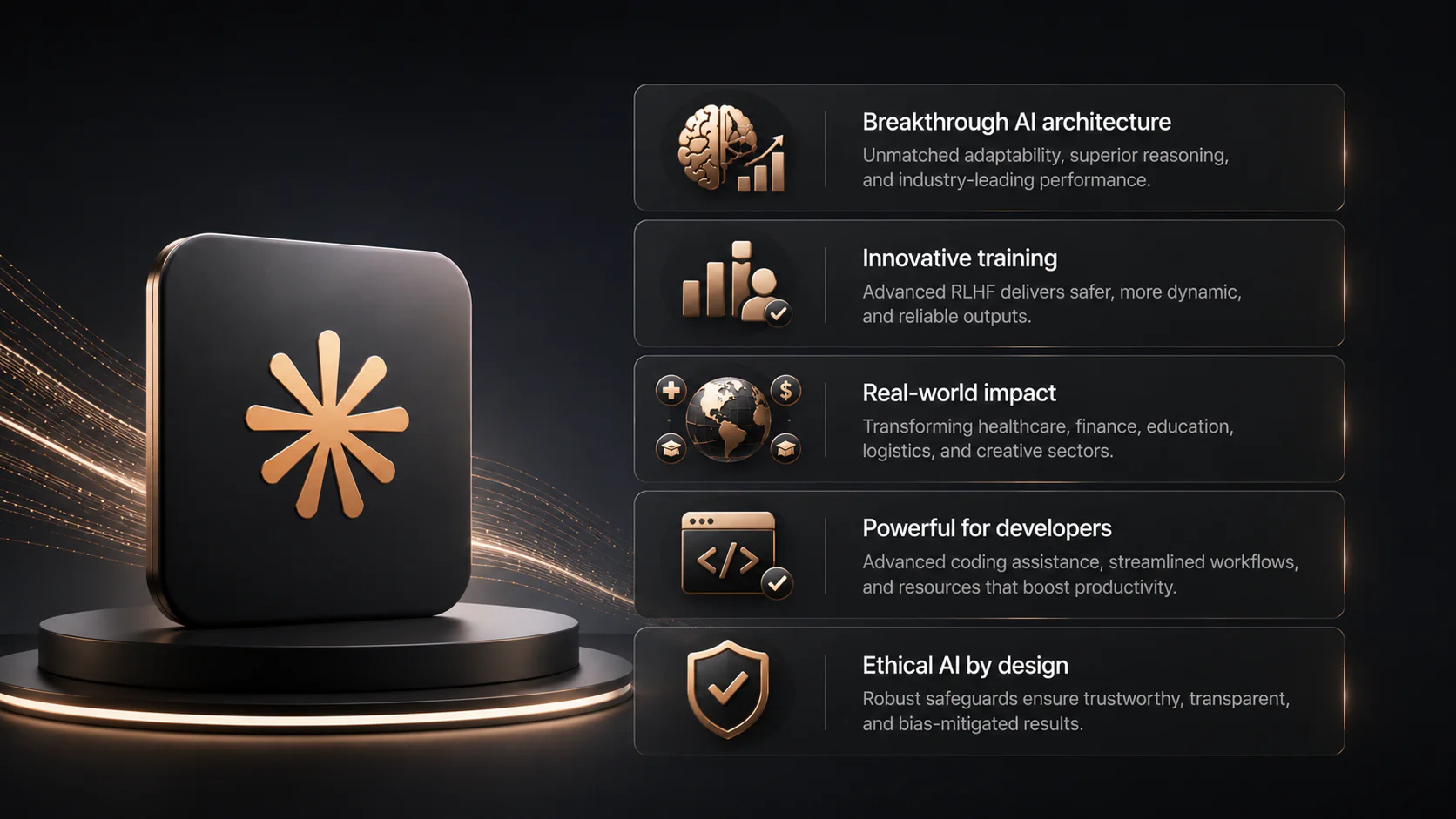
- Breakthrough AI architecture with unmatched adaptability, superior reasoning, and industry-leading performance.
- Innovative training — including advanced reinforcement learning from human feedback (RLHF) — enables safer, more dynamic, and reliable outputs compared to previous language models.
- Real-world impact across healthcare, finance, education, logistics, and creative sectors, driving higher efficiency and smarter decision-making.
- Powerful coding assistance, streamlined workflows, and actionable resources that boost developer productivity and software quality.
- Emphasis on ethical AI and robust safeguards for trustworthy, transparent, and bias-mitigated results in critical environments.
How Claude Opus 4.7 builds on earlier models
At the heart of Claude Opus 4.7 is a focused commitment to learning from the strengths and shortcomings of earlier models. Anthropic’s most powerful AI model to date draws deeply from the developmental history of Claude and other language model families, carefully analyzing prior iterations to ensure each generation is smarter, quicker, and more reliable. Opus 4.7 doesn’t just replicate what worked before — it fundamentally reimagines how advanced reasoning and nuanced understanding can be delivered at scale.
One of the key areas where Claude Opus 4.7 differentiates itself from prior Opus versions is its expanded performance spectrum. Superior data ingestion and pre-training allow it to interpret complex prompts, understand user intent, and generate more coherent answers across a broad range of topics. Unlike earlier versions, which excelled at specific tasks but struggled with others, Opus 4.7 is versatile — making meaningful inroads in scientific research synthesis, natural language dialogue, and creative brainstorming.
The difference is particularly striking in long-form reasoning and multi-step problem solving. Where prior language models, including earlier versions of Claude, might have faltered by losing track of conversational context or introducing factual inaccuracies, Claude Opus 4.7 demonstrates a new standard of reliability. Its capabilities extend beyond pattern matching — it reasons through content, evaluates alternatives, and prioritizes the most relevant information even when queries grow in complexity.
Anthropic’s commitment to ethical AI also plays a crucial role. By learning from both technical and ethical feedback on past models, Opus 4.7 embodies improved safeguards, bias mitigation, and robustness — ensuring not only higher performance but also greater trustworthiness and transparency.
Everyday benefits for users
Building on these advancements, users can experience practical benefits in day-to-day work:
- Generate more accurate summaries of lengthy documents, saving time in academic and professional settings.
- Receive context-aware code suggestions that accelerate software development and reduce debugging time.
- Craft nuanced and engaging marketing content that resonates with diverse audiences.
- Extract key insights from complex data sources for faster, data-driven decisions.
- Interact with multilingual support features that improve accessibility across global teams.
- Enhance creative writing with improved narrative coherence and fewer revisions.
- Deliver more reliable medical or technical explanations for professional communication.
Innovations in model architecture and training
The transformative capabilities of Claude Opus 4.7 can be traced to bold innovations in both model architecture and training methodologies. While previous versions such as Claude Sonnet set important precedents, Opus 4.7 marks a significant leap forward through inventive design and a tightly integrated software stack that supports scalable, high-performance computation.
One of the most striking facets of Opus 4.7 is its hybridized transformer-based architecture. Building on the blueprints of prior models, it incorporates novel attention mechanisms and modular design principles that enable more contextually aware information processing. Innovations in multi-path processing and token handling let the model parse and synthesize intricate relationships within data — ensuring both speed and heightened accuracy across complex prompts.
A game-changing component lies in the training pipeline. Releasing Opus 4.7 demanded new techniques that go far beyond traditional supervised learning, leveraging advanced reinforcement learning from human feedback (RLHF) to ensure safe and ethically sound outputs. Continuous refinement during training has helped mitigate common issues like hallucination and overfitting, setting a new reliability standard.
These breakthroughs run on robust, purpose-built software platforms designed for distributed training. The architecture was crafted to optimize not only accuracy, but also energy efficiency and inference speed — giving businesses and researchers smoother integration, faster deployment, and better cost-effectiveness compared to prior Opus models.
| Aspect | Claude Opus 4.7 innovations | Benefits | Comparison to earlier models |
|---|---|---|---|
| Contextual understanding | Advanced long-context window mechanisms | Improved coherence across lengthy documents | Earlier models struggled with context retention over long sequences |
| Reasoning & compositionality | Enhanced multi-step reasoning algorithms | Greater accuracy in complex problem-solving | Previous models offered limited logical chaining |
| Knowledge integration | Dynamically updatable knowledge layers | Faster adaptation to recent information | Older models relied on static, less current training data |
| Efficiency & latency | Optimized transformer architecture | Faster response times and reduced compute usage | Prior architectures exhibited higher latency and energy demands |
Real-world applications across industries
Claude Opus 4.7 stands at the forefront of AI models, distinguished by its tangible impact across diverse industries. Its enhanced reasoning and capabilities are woven directly into the solutions businesses deploy daily.
In healthcare, Opus 4.7 supports medical research, clinical decision-making, and patient engagement. Its deep contextual understanding helps synthesize massive research datasets, detect anomalies in patient records, and support accurate diagnostics — all while maintaining compliance with strict data privacy requirements.
The financial sector also benefits significantly. The model outpaces previous Opus versions in risk assessment, fraud detection, and personalized financial recommendations. Advanced reasoning allows it to sift through vast transactional histories in real time, flag suspicious activities, and provide actionable insights for compliance teams.
In customer service and enterprise operations, Opus 4.7 enables highly effective chatbots, virtual assistants, and automated help desks. Reduced latency, lower error rates, and more human-like interactions translate into improved customer satisfaction and streamlined support workflows.
Creative industries have also been transformed. Improvements in reasoning allow Opus 4.7 to co-author articles, generate marketing copy, and brainstorm ideas in ways that feel authentic and original — a clear advantage for agencies seeking fresh perspectives and rapid turnaround.
Educational institutions now benefit through automated grading, personalized tutoring, and the ability to digest complex scientific literature — improving knowledge transfer on a massive scale. The model also helps in logistics, legal, and manufacturing, optimizing supply chains, drafting contracts, and ensuring adherence to evolving regulatory standards.
Empowering developers: coding with Claude
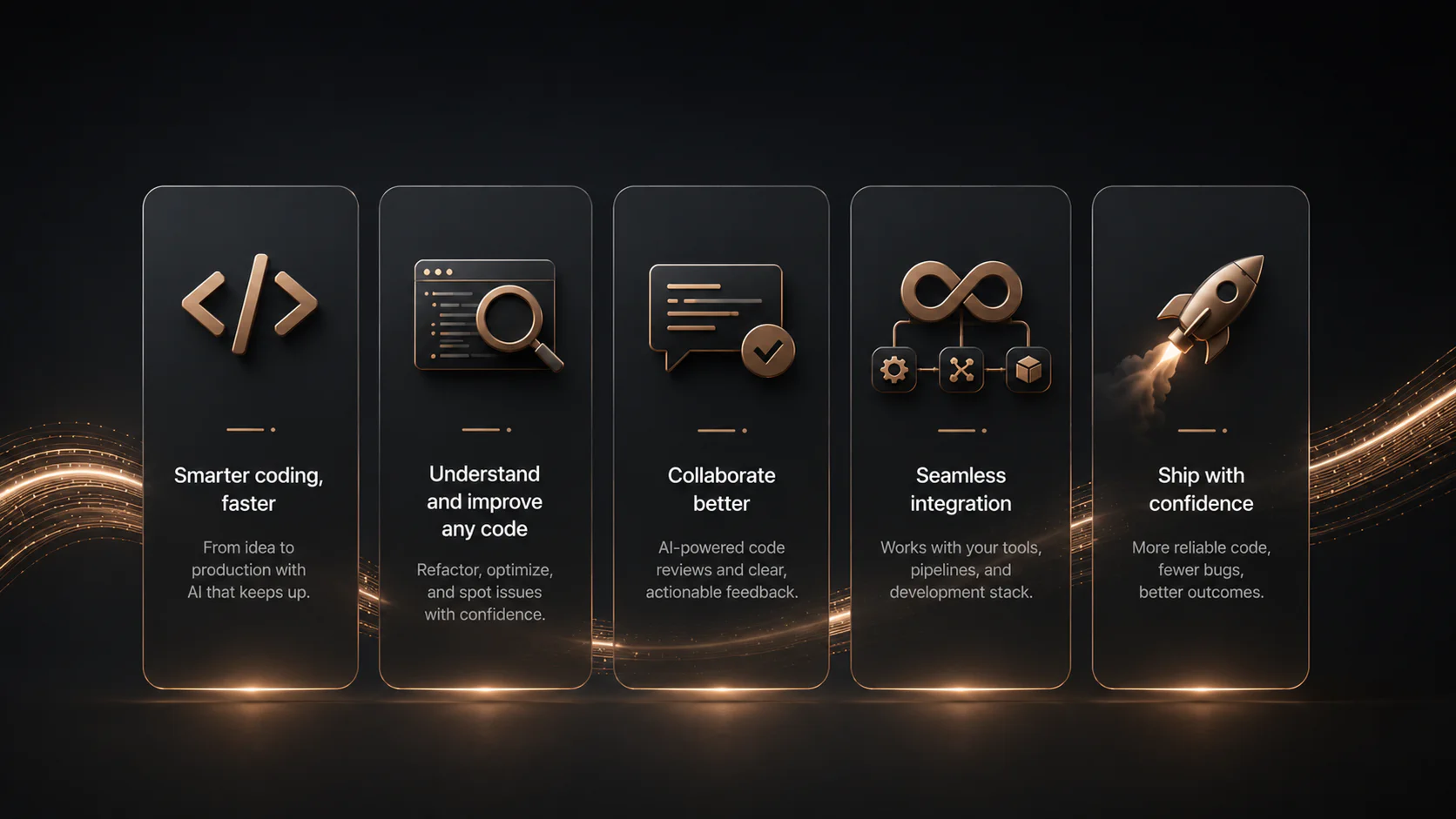
The integration of Claude Opus 4.7 into the development ecosystem pushes coding capabilities far beyond previous Claude models. Developers gain unprecedented tools to streamline software design, overcome technical obstacles, and innovate at scale. By leveraging Claude’s expanded reasoning, flexible support features, and deep contextual understanding, developers can enhance every stage of the software lifecycle — from ideation to deployment.
When you provide detailed specifications or structured snippets, the model’s advanced comprehension ensures your requirements are not just understood, but anticipated. This is especially useful for prototyping new software or refactoring legacy code, where Claude highlights design patterns, suggests logical improvements, and flags potential bottlenecks before they reach production. For collaborative teams, Opus 4.7 offers well-commented suggestions that automate parts of the code review process.
Many leading development environments now offer direct connectivity between Claude and popular coding platforms, turning the model into a real-time assistant for software builds, bug tracking, and deployment automation. Setting up custom workflows that combine Opus 4.7 outputs with CI/CD pipelines, version control systems, and issue management tools supercharges productivity.
Practical tips to maximize results
- Use iterative prompting. Refine initial outputs with clarifying prompts to guide the model toward more accurate, contextually relevant solutions.
- Adopt a modular approach. Break down large coding challenges into smaller functions or components — Opus 4.7 reasons over modular code more effectively.
- Integrate with your stack. Connect Opus 4.7 to CI/CD, version control, and issue tracking to minimize manual overhead.
- Prioritize security. Supplement the model’s built-in safeguards with established coding standards and comprehensive code review practices.
- Leverage the community. Dedicated forums, code-sharing communities, and curated resource lists help teams stay on top of evolving best practices.
A new standard for AI
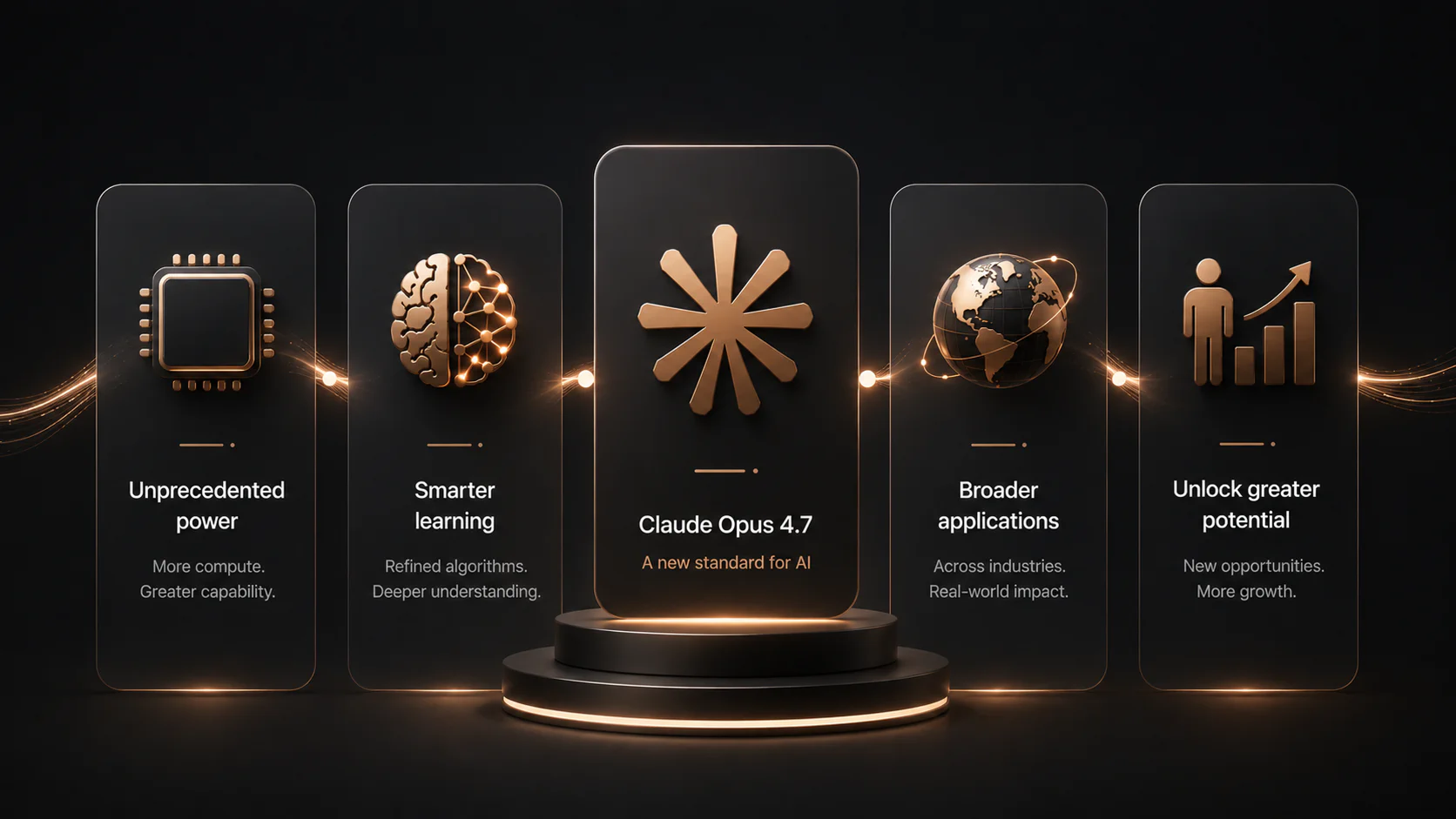
As Claude Opus 4.7 ushers in a new era of AI innovation, it stands as a testament to the rapid evolution of intelligent technologies. With unprecedented processing power, refined learning algorithms, and broader application potential, it empowers users across industries to achieve remarkable results. By embracing this cutting-edge model, you’re not only staying at the forefront of technological progress — you’re also unlocking fresh opportunities for growth and efficiency.
FAQ
What is Claude Opus 4.7 and how does it differ from previous Claude models?
What are the key technological advancements behind Claude Opus 4.7?
How does Claude Opus 4.7 impact real-world industries?
- Healthcare: supports diagnostics, research synthesis, and patient engagement.
- Finance: enhances risk assessment, fraud detection, and personalized advisory.
- Customer service: powers human-like chatbots and reduces resolution times.
- Education: automates grading, provides tutoring, and summarizes research.
- Creative: aids in drafting content, brainstorming, and marketing copy.