AI training jobs in 2026 include remote data annotation, RLHF review, prompt evaluation, chatbot QA, coding AI trainer work, expert fact-checking, and domain-specific model review. Some roles are beginner-friendly and remote; others pay more because they require coding, finance, law, medicine, math, science, or language expertise.
Quick answer: if you have no experience, start with general data annotation, RLHF response ranking, or chatbot QA. If you can write, code, speak multiple languages, or verify specialist work, move toward prompt evaluation, AI writing review, coding trainer, or domain expert roles. This guide compares 20 AI training jobs by tasks, pay, required skills, pros, cons, and realistic entry path.
Best AI training jobs by entry path
| Entry path | Best-fit roles | Typical requirement | Pay ceiling trend |
|---|---|---|---|
| No experience | Data annotation, chatbot QA, search evaluation | Accuracy, patience, written English | Lower, but easiest to start |
| Strong writer | RLHF reviewer, prompt writer, AI content editor | Writing samples and judgment | Medium to high |
| Developer | Coding AI trainer, code evaluator, test-case writer | Real programming ability | High |
| Bilingual | Localization evaluator, translation reviewer | Native-level language skill | Medium to high |
| Domain expert | Legal, finance, medicine, STEM reviewer | Professional or academic expertise | Highest |
| Technical ML path | Dataset QA, synthetic data designer, eval specialist | Python/data/ML basics | Highest long-term ceiling |
Source check: AI training pay and availability change quickly. For this update, we checked current public platform pages such as DataAnnotation, which lists remote hourly AI-training projects and higher ranges for coding/domain experts, plus current Outlier/Scale-style AI trainer listings. Treat all pay ranges as directional, not guaranteed.
What jobs can you do with AI training?
More than most people expect. The umbrella term “AI training jobs” covers everything from clicking “thumbs up / thumbs down” on chatbot responses to deeply technical work like fine-tuning large language models for enterprise clients. In between, there are fact-checkers, prompt writers, ethics auditors, red teamers, multilingual evaluators, and synthetic data designers – roles that barely existed three years ago.
What ties them together is a shared goal: making AI systems smarter, safer, and more useful. Some of these jobs require zero technical background. Others demand a PhD. Most fall somewhere in the middle.
How to get into AI training jobs with No Experience?
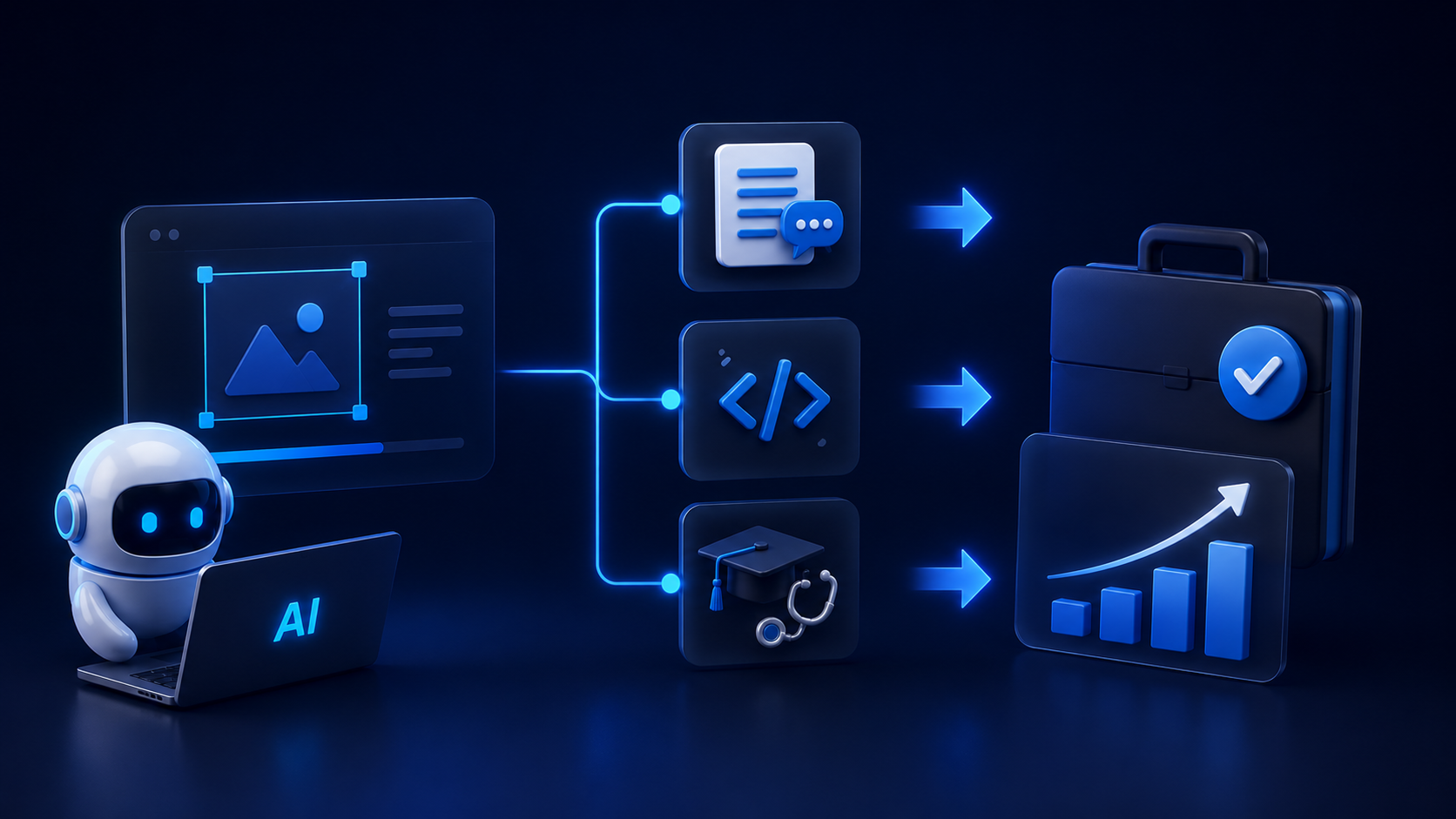
The honest answer: start your AI career paths with annotation. Data annotation and RLHF (Reinforcement Learning from Human Feedback) review roles are the classic entry points – they require attention to detail and good judgment more than any specific credentials. Platforms like Scale AI, Remotasks, and Appen regularly onboard people with no prior experience and provide their own training.
From there, the path forks. Writers gravitate toward prompt engineering and content editing. Developers move into coding trainer roles. Domain experts – doctors, lawyers, scientists – find that their knowledge is suddenly valuable to AI companies that need expert-verified training data.
The key for finding remote AI training jobs no experience is building a portfolio fast. Even 30–40 hours of documented annotation work on a public platform can open doors to higher-paying roles.
If you are starting from zero, build the basics first with AI courses for beginners, then compare the wider entry-level options in remote AI jobs with no experience. For flexible schedules around caregiving, also review remote jobs for stay-at-home moms.
Which AI training platform Offer Remote Jobs?
Almost all of them. Remote work is essentially the default in this space. The major platforms offering consistent remote AI training work include:
- Scale AI – enterprise-grade annotation, higher pay, stricter vetting
- Outlier AI (formerly Scale’s crowdsource arm) – flexible freelance model, popular with writers and coders
- Appen – one of the oldest, global reach, huge variety of tasks
- Remotasks – beginner-friendly, gamified onboarding
- Surge AI – focused on high-quality NLP tasks, pays above average
- DataAnnotation.tech – popular with US-based workers, competitive rates
Anthropic, OpenAI, and Google also hire remote contractors directly for specialized training roles, though those tend to require more vetting.
What are the top 5 AI certifications?
Qualifications matter more in 2026 because competition is higher for well-paid AI training work, especially coding, STEM, finance, law, and medical review roles. Certifications that really stand out in job postings include:
- Google Professional Machine Learning Engineer – respected in the industry;
- AWS Certified Machine Learning – in demand for machine learning specialists in the cloud;
- DeepLearning.AI (Coursera) specializations – engineering and other specializations are particularly relevant.
- IBM AI Engineering Professional Certificate – solid for fundamentals
- Hugging Face NLP Course – free, practical, and increasingly cited in job postings
Which AI course is best for beginners?

If you’re starting from zero, Coursiv is worth trying. Lessons are 15 minutes a day, no coding background needed, and the curriculum covers the tools that actually come up in AI training jobs – ChatGPT, MidJourney, Jasper AI, DALL-E, and more. Over 800,000 learners have gone through it, and you finish with a certificate you can add to your LinkedIn profile.
Best 20 AI Training Job Ideas with and Without Experience in 2026
Data Annotation Specialist
Skills to Learn
JSON basics, image/text labeling tools (Labelbox, CVAT), quality guidelines interpretation, attention to detail.
Daily Tasks
Tagging objects in images, labeling sentiment in text, categorizing content, verifying existing labels, meeting accuracy quotas.
Pros
Zero barrier to entry. Flexible hours. Global availability of work.
Cons
Repetitive. Pay can stagnate. Quality metrics can feel arbitrary without context.
Companies or Industries that Usually Offer these Jobs and Approximate Hourly Payment
Appen, Lionbridge, iMerit, Scale AI. $10–$18/hr for general annotation; up to $25/hr for specialized domains (medical imaging, autonomous vehicles).
AI Data Annotator
This overlaps with Data Annotation Specialist but tends to refer specifically to text and language data – think labeling named entities, marking toxic content, or ranking AI-generated responses.
Skills to learn
Basics of NLP (natural language processing), understanding of annotation schemes, familiarity with tools such as Prodigy or Label Studio.
Daily tasks
Verifying model output, annotating text fragments, resolving disagreements between annotators, and creating annotation guidelines.
Pros
Higher cognitive engagement than image annotation. Builds genuine NLP intuition over time.
Cons
Fatigue from reading large volumes of text. Pay variation across platforms is significant.
Companies or Industries that Usually Offer these Jobs and Approximate Hourly Payment
Surge AI, DataAnnotation.tech, Toloka. $14–$22/hr depending on language and domain.
RLHF Reviewer
Probably the role that exploded fastest after ChatGPT launched. RLHF Reviewers evaluate AI-generated responses to help models learn which outputs are helpful, accurate, and safe.
Skills to Learn
Critical reading, calibration training, understanding of RLHF methodology (you don’t need to code it, just understand what you’re contributing to).
Daily Tasks
Comparison of pairs of AI responses, assessment of usefulness and harmlessness, writing detailed reviews with explanations of ratings, and pointing out non-standard situations.
Pros
Intellectually engaging. Direct impact on major AI products. Growing demand.
Cons
Guidelines are dense and evolve frequently. Can involve exposure to disturbing content in safety testing contexts.
Companies or Industries that Usually Offer these Jobs and Approximate Hourly Payment
Anthropic (contractors), OpenAI (Scale AI pipeline), Cohere. $18–$35/hr; specialized expertise commands higher rates.
Prompt Engineer / Writer
This job title got overhyped and then unfairly dismissed. The reality is somewhere sensible: prompt engineering as a standalone role has matured into something more like technical writing for AI systems.
Skills to Learn
Understanding of how LLMs process instructions, output formatting, chain-of-thought prompting, system prompt design.
Daily Tasks
Writing and testing prompts for specific use cases, documenting prompt libraries, A/B testing outputs, collaborating with product teams.
Pros
High demand in enterprise AI adoption. Creative and analytical balance.
Cons
Hard to quantify impact. Role is still being defined at many companies.
Companies or Industries that Usually Offer these Jobs and Approximate Hourly Payment
AI product startups, legal tech, edtech, marketing SaaS companies. $25–$55/hr freelance; $80k–$140k annual for full-time roles.
AI Fact-Checker
As AI systems get deployed in journalism, healthcare, and finance, someone has to verify that what they’re saying is actually true. That someone is increasingly a specialized fact-checker trained to evaluate AI outputs.
Skills to Learn
Research methodology, source evaluation, familiarity with specific domain (medical, legal, financial facts), knowledge of how LLMs hallucinate.
Daily Tasks
Cross-referencing AI claims against primary sources, flagging inaccuracies, categorizing error types, writing correction notes for training pipelines.
Pros
High value-add. Can be deeply domain-specific (and well-paid for it). Genuine public interest work. High-demanding AI training jobs remote.
Cons
Can be slow, painstaking work. Hard to scale.
Companies or Industries that Usually Offer these Jobs and Approximate Hourly Payment
AI-assisted newsrooms, healthtech, legal AI companies. $20–$40/hr.
Chatbot Quality Assurance (QA) Tester
Think of this as software QA, but your bug reports are things like “the bot confidently told a user that aspirin cures diabetes.” The role is part tester, part conversation designer, part safety reviewer.
Skills to Learn
How to write test cases, how to think about edge cases, how to report bugs, and how to use conversational UX.
Daily Tasks
Running test conversations with deployed bots, keeping track of how they fail, making sure that personas are consistent, and looking for policy violations.
Pros
High variety of tasks. Bridge between technical and non-technical work.
Cons
Can feel like a game of whack-a-mole. Bots change frequently, making test suites outdated fast.
Companies or Industries that Usually Offer these Jobs and Approximate Hourly Payment
Customer service AI companies, healthcare chatbot providers, fintech. $18–$30/hr.
Coding AI Trainer
This is one of the highest-paid AI training jobs remote roles in the space. AI coding assistants (Copilot, Cursor, Claude) need humans who actually know how to code to evaluate whether their suggestions are correct, efficient, and secure.
Skills to Learn
You should be able to read and write in at least one major language (Python is preferred), know how to review code, know about common vulnerabilities, and be familiar with code patterns that LLMs make.
Daily Tasks
Checking code snippets made by AI, ranking solutions by quality, writing better alternatives, pointing out security problems, and adding notes to explanations.
Pros
Pays significantly above average. Directly improves tools millions of developers use.
Cons
Requires real coding skills. Can involve monotonous repetition of similar code patterns.
Companies or Industries that Usually Offer these Jobs and Approximate Hourly Payment
Outlier AI, Scale AI, direct contracts with AI labs. $35–$65/hr for experienced developers.
STEM AI Specialist
AI companies building tools for science, engineering, and mathematics need people who can evaluate technical accuracy at a level general annotators can’t. Physicists reviewing physics problems. Chemists checking molecular synthesis routes. Mathematicians verifying proofs.
Skills to Learn
Deep knowledge of the subject (not up for debate), the ability to explain your reasoning clearly, and experience with LaTeX or other technical notation.
Daily Tasks
Evaluating AI-generated solutions to technical problems, writing expert-level feedback, creating benchmark problems, and checking citations.
Pros
Very high pay. Rare skill set means less competition. Genuinely challenging work.
Cons
Limited volume of available tasks. Niche enough that steady work requires multiple clients.
Companies or Industries that Usually Offer these Jobs and Approximate Hourly Payment
AI research labs, edtech platforms (Khan Academy AI, Wolfram). $45–$90/hr.
Search Evaluation Agent
Google, Microsoft, and dozens of smaller search companies pay people to evaluate search result quality. With AI-generated content flooding the web, this role has become more important – and more complex.
Skills to Learn
Understanding of search intent, quality rating guidelines (Google’s are publicly available), web literacy, attention to detail.
Daily Tasks
Rating relevance of search results, identifying spam or low-quality AI content, assessing page quality, mobile usability evaluation.
Pros
Steady work. Flexible hours. Good entry point into the industry.
Cons
Pay is on the lower end. Work can feel disconnected from visible outcomes.
Companies or Industries that Usually Offer these Jobs and Approximate Hourly Payment
Lionbridge, TELUS International, Appen. $14–$20/hr.
AI Content Editor
Editing AI-generated content is genuinely its own skill. It’s not just fixing grammar – it’s knowing which parts of a text are suspiciously generic, which facts need verification, which sentences have the hollow ring of something a model produced to fill space.
Skills to Learn
Strong writing and editing skills, knowledge of how to find AI, basic SEO, and how to develop a brand voice.
Daily Tasks
Editing AI drafts for tone and accuracy, rewriting parts that sound robotic, checking facts, and keeping style guides up to date.
Pros
In enormous demand right now. Works across every industry.
Cons
Can be undervalued (“just clean up the AI output”). Setting fair rates is a constant negotiation.
Companies or Industries that Usually Offer these Jobs and Approximate Hourly Payment
Content agencies, media companies, marketing teams. $20–$45/hr freelance.
Multilingual AI Evaluator
Most major AI models are trained primarily on English data. That’s a problem for everyone else. Multilingual evaluators test AI performance in specific languages and cultural contexts – and they’re genuinely hard to find for less common languages. One of the perfect remote AI training jobs suitable for people with good foreign language skills.
Skills to Learn
You should be able to speak the target language fluently or almost fluently, understand the culture, and know how to make basic notes.
Daily Tasks
Checking the quality of translations, testing how well AI understands different cultures, rating responses in the target language, and pointing out mistakes in idioms and registers.
Pros
Premium pay for rare languages. Remote, global demand. Growing field. One of the best remote AI training jobs no experience.
Cons
Work volume can be inconsistent for smaller languages.
Companies or Industries that Usually Offer these Jobs and Approximate Hourly Payment
Translation AI companies, Scale AI, Unbabel, direct AI lab contracts. $18–$40/hr; higher for languages with fewer fluent speakers.
Legal / Medical AI Trainer
Possibly the most consequential role on this list. AI systems giving legal or medical guidance can cause serious harm if they’re wrong. Professionals who can evaluate these outputs with domain authority are paid accordingly.
Skills to Learn
Active license or verifiable credentials in relevant field, ability to explain errors clearly for training purposes, understanding of liability considerations.
Daily Tasks
Reviewing AI legal briefs or medical summaries, flagging factual errors, rating advice quality, writing corrected versions, setting safety thresholds.
Pros
Top pay in the AI training space. High professional satisfaction.
Cons
Liability concerns. Some professionals are cautious about association with AI companies.
Companies or Industries that Usually Offer these Jobs and Approximate Hourly Payment
Legal AI startups (Harvey, Clio), healthtech companies, AI labs. $60–$150/hr for licensed professionals.
AI Ethics & Bias Auditor
The “is this AI system fair?” question has become a legal and regulatory matter in several jurisdictions. Bias auditors work at the intersection of data science, social science, and policy.
Skills to Learn
Statistics basics, fairness metrics (demographic parity, equalized odds), research methodology, policy literacy.
Daily Tasks
Testing AI outputs on different demographic groups, keeping track of how they affect different groups, writing audit reports, and suggesting ways to lessen the effects.
Pros
High growth field. Academic and industry demand. Strong public interest angle.
Cons
Methodologies are still evolving. Can be politically complex inside companies.
Companies or Industries that Usually Offer these Jobs and Approximate Hourly Payment
AI governance consultancies, financial services, hiring tech, government contractors. $40–$80/hr.
Machine Learning Engineer
The technical backbone of AI development. MLEs design, build, and deploy the systems that all the other roles in this list ultimately feed into.
Skills to Learn
Python, PyTorch or TensorFlow, distributed computing, MLOps (MLflow, Weights & Biases), cloud platforms.
Daily Tasks
Training and evaluating models, building data pipelines, optimizing inference performance, deploying models to production.
Pros
Highest stable salaries in the field. Enormous demand.
Cons
High barrier to entry. Fast-moving field requires constant upskilling.
Companies or Industries that Usually Offer these Jobs and Approximate Hourly Payment
AI labs, big tech, fintech, autonomous vehicle companies. $80–$150/hr contracting; $140k–$300k+ annually.
Fine-Tuning Specialist
Fine-tuning is the process of taking a general-purpose model and adapting it for a specific task or industry. It’s more accessible than it used to be – thanks to tools like LoRA and platforms like Hugging Face – but it still requires real technical chops.
Skills to Learn
You should learn how to use Python, the Hugging Face ecosystem, LoRA/QLoRA techniques, how to prepare datasets, and evaluation metrics.
Daily Tasks
Making datasets that are specific to a domain, running fine-tuning jobs, testing performance on benchmarks, and changing hyperparameters.
Pros
High demand from enterprise clients building custom AI products.
Cons
Computationally expensive work requires access to good hardware or cloud credits.
Companies or Industries that Usually Offer these Jobs and Approximate Hourly Payment
AI product companies, healthcare AI, legal tech, Fortune 500 AI initiatives. $60–$100/hr.
Data Engineer
Every AI model needs clean, well-structured data to learn from. Data engineers build the pipelines that get raw data into a usable form – and in AI contexts, that includes everything from web scraping to deduplication to compliance with data privacy regulations.
Skills to Learn
SQL, Python, Apache Spark or Airflow, cloud data warehouses like BigQuery and Snowflake, and data quality frameworks.
Daily Tasks
Building and keeping ETL pipelines up to date, removing duplicates from training datasets, making sure data is correct, and working with ML teams.
Pros
Foundational role with strong job security. Less trend-dependent than some ML roles.
Cons
Can be less visible than modeling work. Debugging pipelines is an acquired taste.
Companies or Industries that Usually Offer these Jobs and Approximate Hourly Payment
AI labs, data-heavy industries (finance, healthcare, retail). $55–$90/hr contracting.
Creative Writing AI Trainer
AI creative writing tools are genuinely good now – sometimes. The bad outputs are subtle: technically correct prose that’s emotionally flat, stories with inconsistent character voices, poetry that scans but doesn’t resonate. Creative writing trainers have the literary judgment to catch this.
Skills to Learn
Strong writing skills, knowledge of how to tell a story, and the ability to explain why something works or doesn’t.
Daily Tasks
Evaluating AI-generated creative works, ranking the quality of stories, writing better alternatives, and giving structured feedback on voice and style.
Pros
Genuinely enjoyable for people who love writing. Demand is growing fast.
Cons
Subjective criteria make calibration tricky. Pay varies wildly.
Companies or Industries that Usually Offer these Jobs and Approximate Hourly Payment
Outlier AI, entertainment companies, publishing AI tools. $20–$40/hr.
AI Red Teamer
Red teaming is the practice of trying to break an AI system – finding its failure modes before bad actors do. It’s part security research, part creative problem-solving, and it’s one of the more intellectually unusual roles in this list.
Skills to Learn
Adversarial thinking, prompt injection techniques, understanding of AI safety concepts, structured documentation of failures.
Daily Tasks
Attempting to elicit harmful outputs, documenting jailbreak attempts, writing detailed failure reports, stress-testing safety filters.
Pros
Fascinating work. High demand at safety-focused labs. Can transition into AI safety research.
Cons
Involves intentional exposure to dark content. Emotionally taxing for some.
Companies or Industries that Usually Offer these Jobs and Approximate Hourly Payment
Anthropic, OpenAI, Google DeepMind, AI governance firms. $40–$80/hr and up for experienced practitioners.
Transcription & Audio Trainer
Speech recognition is still imperfect – especially for accented English, non-English languages, noisy environments, and specialized vocabulary. Audio trainers create and verify the data that makes these systems better.
Skills to Learn
Being able to accurately transcribe, understand phonetics, and use audio annotation tools like Audacity and Label Studio.
Daily Tasks
Writing down speech samples, recording specific phonemes or phrases, identifying the speaker, and checking automated transcriptions for mistakes.
Pros
Easy to start. Flexible, async work.
Cons
Time-intensive relative to pay. Quality requirements are exacting.
Companies or Industries that Usually Offer these Jobs and Approximate Hourly Payment
Voice AI companies (Deepgram, Assembly AI), automotive (in-car voice systems), call center AI. $12–$22/hr.
Synthetic Data Designer
Real training data is expensive, hard to label, and often privacy-constrained. Synthetic data – artificially generated datasets that mimic real-world distributions – is increasingly how AI companies fill the gaps. Designing it well is a non-trivial skill.
Skills to Learn
Understanding of data distributions, Python scripting, domain knowledge of the target use case, familiarity with synthetic data tools (Gretel, Mostly AI).
Daily Tasks
Making fake datasets, checking that they are statistically similar to real data, making edge cases, and writing down the steps for making data.
Pros
Cutting-edge field. High value, relatively low competition.
Cons
Requires both domain expertise and technical skills – hard combo to find.
Companies or Industries that Usually Offer these Jobs and Approximate Hourly Payment
AI labs, financial services, autonomous vehicle companies, healthcare AI. $50–$90/hr.
AI Personalization Specialist
The last role on this list is also one of the most commercially important. AI personalization specialists design and evaluate the systems that make AI assistants adapt to individual users – their preferences, communication styles, and needs.
Skills to Learn
UX research methods, recommendation system basics, behavioral psychology principles, A/B testing.
Daily Tasks
Designing personalization experiments, evaluating user preference models, writing evaluation criteria, collaborating with product and ML teams.
Pros
High commercial value. Bridge between human-centered design and AI systems.
Cons
Requires understanding of both user behavior and ML systems – specialized knowledge combination.
Companies or Industries that Usually Offer these Jobs and Approximate Hourly Payment
Consumer AI companies, streaming platforms, e-commerce AI, healthcare apps. $40–$75/hr.
Conclusion

The remote AI training jobs market in 2026 is real, it’s growing, and it genuinely has room for people at every skill level. The entry points are accessible; the ceiling is high. Whether you’re a literature grad who wants to evaluate creative writing or a credentialed physician curious about healthtech AI – there’s probably a role here that makes sense for you.
The main thing is to start somewhere and build evidence of your work. The market responds to demonstrated skill faster than credentials in most of these roles. Pick one. Try it. The machines aren’t going to train themselves.